

Production Introduction
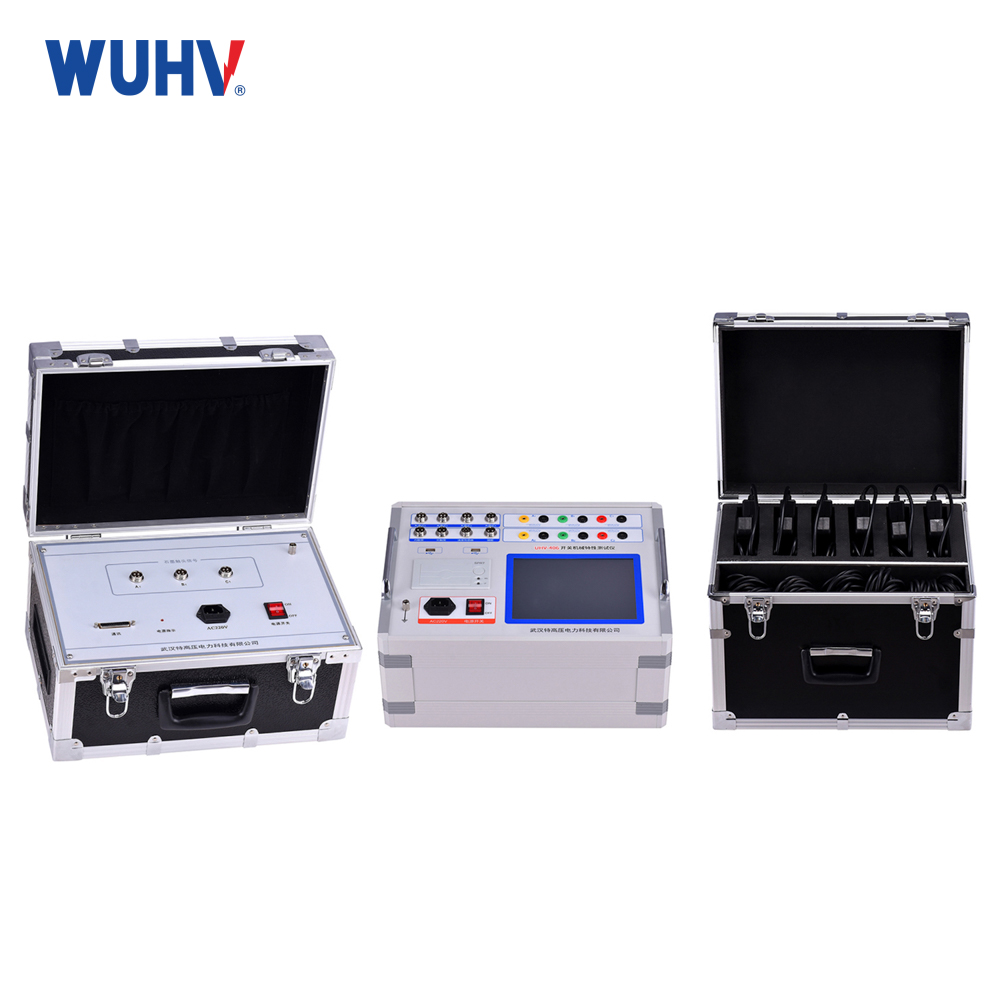
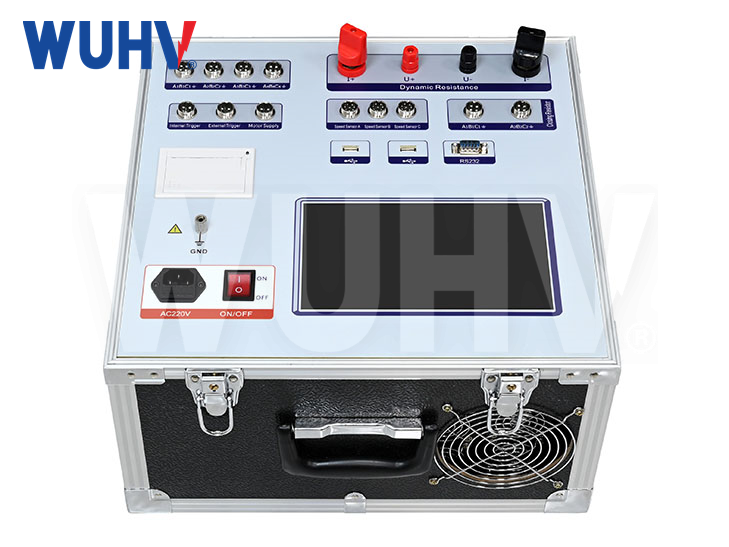
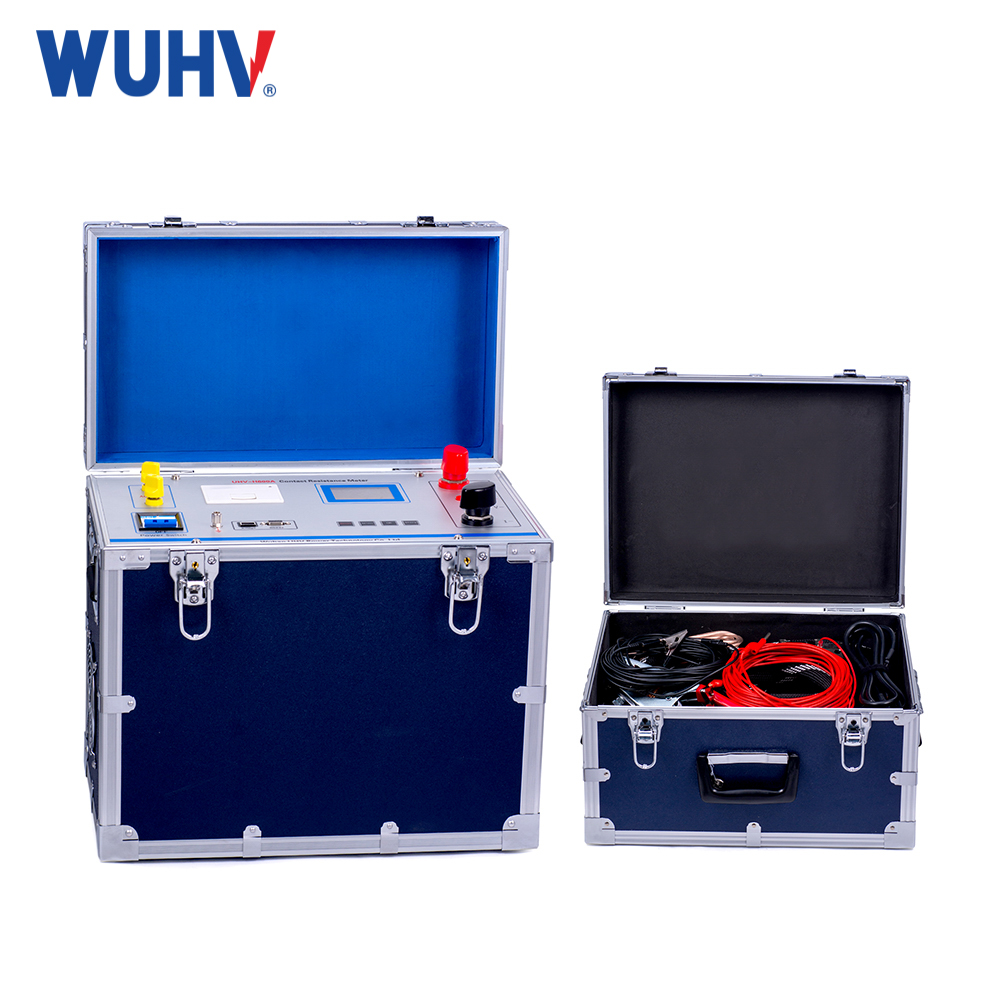
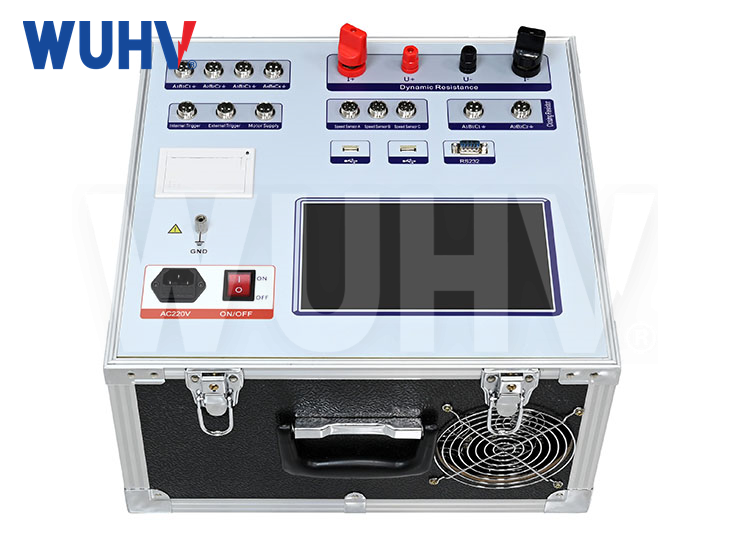
With increasing demands for power system safety and reliability, high-voltage circuit breakers play the dual critical roles of control and protection in grid operations. Our high voltage جircuit breaker analyzer, designed in compliance with GB1984-2014 and DL/T846.3-2017 standards, جircuit breaker analyzer manufactures provides precise mechanical characteristic measurements for all major breaker types including oil-minimum, oil-bulk, vacuum and SF6 breakers across various voltage levels. This essential testing solution enables accurate dynamic performance analysis to ensure optimal circuit breaker operation and system protection.
Production Parameters
المعايير الفنية
| Time measurement | 12 channels inherent opening (closing) time |
| Different periods in the opening (closing) phase | |
| The difference between opening (closing) phases in different periods | |
| Closing (opening) bounce time (bounce times) | |
| Different period test range: 01ms~99ms, resolution: 0.01ms; | |
| Internal trigger test range: 1ms~999ms, resolution: 0.01ms, | |
| 1000ms~9999ms, resolution: 0.1ms, 10000ms~200000ms resolution: 1ms. | |
| External trigger test range: 0.01ms~200s | |
| Accuracy rate within 1000ms: 0.05%±0.1ms | |
| Closing resistance measurement | 3/6 natural opening (closing) time |
| Different phases in the opening (closing) phase | |
| Switching (closing) phase is different | |
| Closing resistance input time, resistance value | |
| نطاق القياس | 30 ~ 10KΩ, resolution 0.1Ω, accuracy: ≤1%±2 words |
| Dynamic resistance measurement | current output 200A, measurement range: 0-50m Ω, accuracy: ≤ 0.5% ± 0.5u Ω. |
| Speed measurement | just opening (just closing) speed |
| Average speed in a specified time period (stroke period or angle period) | |
| Speed measurement range | 0.1mm sensor 0.01 ~ 25.00m/s, Accuracy rate:0.05%±0.1ms |
| 345° Angle sensor 0.01 ~ 25.00m/s,Accuracy rate:0.05%±0.1ms | |
| Laser sensor 0.01 ~ 15.00m/s. (optional) | |
| Stroke measurement | moving contact stroke (stroke) (optional for 3-way stroke measurement) |
| Contact stroke (open distance) | |
| Overtravel | |
| Overshoot stroke or rebound stroke | |
| نطاق القياس | linear sensor: 50mm, measuring range: 0-50mm, resolution: 0.1mm. |
| Rotation sensor: 345°, measuring range: 0-1000mm, resolution: 0.08°. This sensor has an invalid area of 15 degrees, and the effective area of the sensor can be seen on the instrument when it is installed, and the value display is preferably about 160-200 degrees. | |
| Acceleration sensor measuring range: 0-300mm, resolution: 0.1mm. | |
| Accuracy rate:±(1%L+0.2)mm | |
| Coil current | maximum current 20A, resolution: 0.01A. Accuracy rate:±5% |
| Measuring range of coil resistance | 0~2000Ω, resolution: 0.01Ω.Accuracy rate:±5% |
| Instrument power supply | AC220V ± 10%; 50Hz ± 10% |
| DC power output | DC6~270V continuously adjustable, DC24V≤15A (short time), DC220V≤20A (short time). |
| External trigger voltage | AC/DC10-300V, current ≤120A |
| Isolating switch measurement range | (1) Voltage output: DC6~270V (adjustable); |
| (2) Power output time: 0.01-20 seconds (can be set); | |
| (3) the maximum collection time of fracture signal is 200 seconds; | |
| (4) measurable fracture closing time, opening time, three-phase different period, bounce time and frequency. | |
| Host volume | 400×380×285mm |
| استخدام البيئة | -20℃~+50℃ |
| الرطوبة النسبية | ≤90% |
مواصفات المنتج
1. High-Performance Embedded System
A powerful industrial computer with Cortex-A8 processor, 1GB memory and 9" touchscreen for fast, intuitive operation.
2. Instant Data Printing
Built-in thermal printer enables immediate field report generation.
3. All-in-One Power Solution
Integrated adjustable DC power supply (6-270V/20A) eliminates external power needs.
4. Complete Sensor Kit
Includes multiple sensor types with quick-connect design for easy installation.
5. Universal Compatibility
Works with all major circuit breaker types worldwide.
6. One-Test Efficiency
Captures complete datasets and waveforms in a single operation.
7. Smart Data Management
Stores 30,000 tests with time-stamping and expandable memory.
8. Multiple Connectivity
Features USB, optional RS232/WiFi for flexible data transfer.
9. Comprehensive Measurements
Simultaneously tests multiple contact breaks and speeds.
10. Advanced Diagnostics
Provides envelope curves and vibration analysis.
11. Industrial Reliability
500KV substation-proof anti-interference design.
Factors affecting switch characteristics
The "health status" of a switch is not fixed, and there are many factors that can affect its performance:
Operating environment: Moisture, high temperature, low temperature, dust, corrosive gases, etc. can all affect the mechanical components and electrical insulation of the switch.
Mechanical wear: Frequent operation, burning of contacts, aging of springs, etc. can all lead to mechanical wear, which in turn affects action time and force.
Insulation aging: Over time, insulation materials will gradually age and deteriorate, leading to a decrease in insulation strength and even flashover.
Operating mechanism malfunction: If the operating mechanism that controls the switch action (such as spring energy storage mechanism, hydraulic mechanism, etc.) malfunctions, جircuit breaker analyzer supplier will directly affect the normal opening and closing of the switch.
Maintenance situation: Whether regular inspections, lubrication, fastening, and cleaning are done properly has a crucial impact on the performance of the switch.
Application Fields
The high-voltage switch dynamic characteristic tester factory has a wide range of applications in the field of power systems. It can be used for testing and evaluation of power substations, power transmission lines, and other power equipment. Specific applications include but are not limited to the following aspects:
1. Dynamic characteristic evaluation: By testing the dynamic characteristics of high-voltage switches under different working states, engineers can evaluate their fast switching ability, stability, and other important performance indicators, thereby ensuring the safe and stable operation of the power system.
2. Fault analysis: The high-voltage switch dynamic characteristic tester can help engineers analyze fault problems in the power system. By testing the response and dynamic characteristics of the switch under fault conditions, the cause of the fault can be determined and repaired and improved.
3. Equipment development: In the development process of high-voltage switches, dynamic characteristic testers play an important role. It can help engineers evaluate the performance and reliability of new high-voltage switches and make necessary improvements and optimizations.
Frequently Asked Questions
Q: What equipment is the circuit breaker analyzer mainly used to test? Answer: Mainly used for high-voltage circuit breakers, isolating switches, grounding switches and other switch equipment in power systems.
Q: What is the importance of testing switch characteristics for power systems? Answer: Ensuring that switchgear can operate safely and reliably is the key to preventing power accidents and ensuring power supply stability.
Q: What does "synchronicity" testing refer to? Answer: It refers to the consistency of the action time of each phase contact of the circuit breaker during the opening and closing process, which is very important for preventing grid resonance and stable operation.
Q: How should I choose a suitable circuit breaker analyzer for myself? Answer: It needs to be comprehensively considered based on the type of equipment you need to test, voltage level, and on-site testing requirements. Professional manufacturers, such as Wuhan UHV Power Technology Co., Ltd., can provide professional selection recommendations.
Q: What should I do if there is an abnormality in the test data? Answer: In case of abnormal data, first retest to confirm the accuracy of the instrument, and then contact the equipment manufacturer or professional technical personnel for in-depth investigation and diagnosis.
Q: Why do test results sometimes deviate from actual situations? Answer: It may be related to the accuracy of the instrument itself, improper operation, environmental interference, or unstable state of the tested equipment itself.