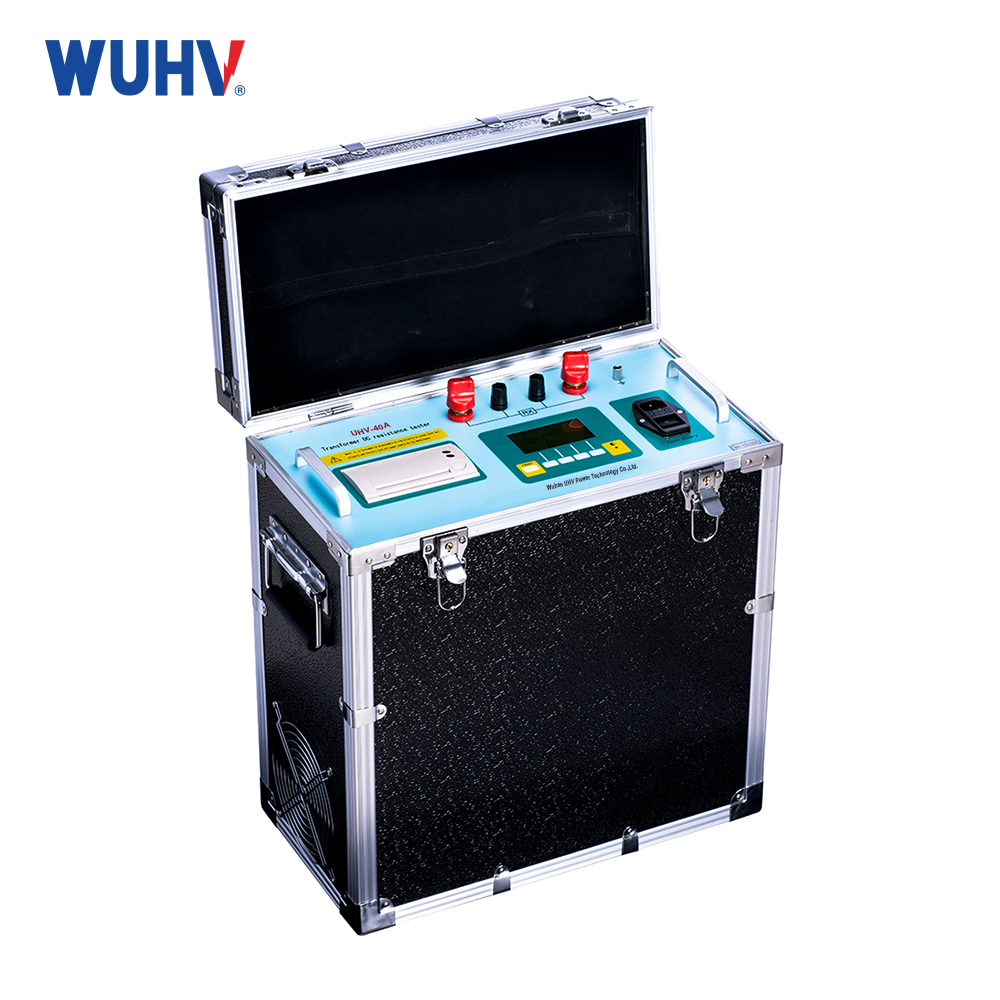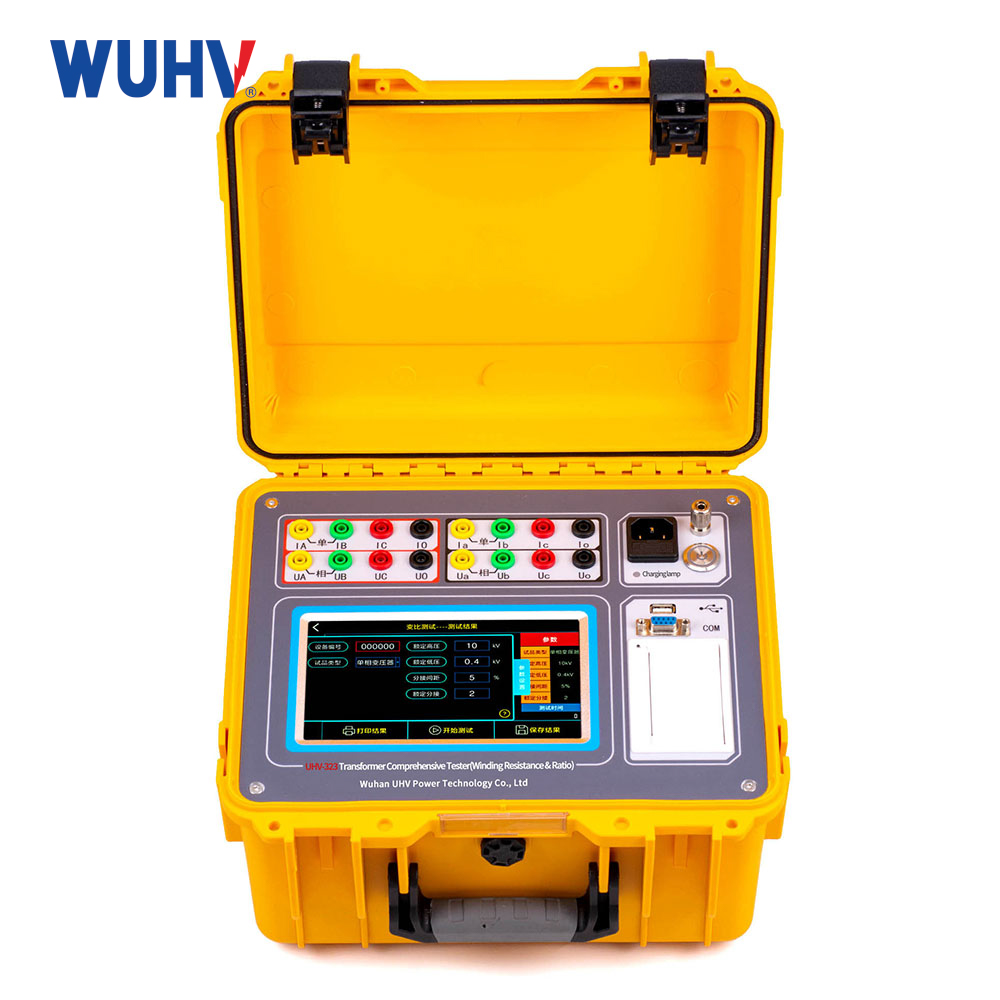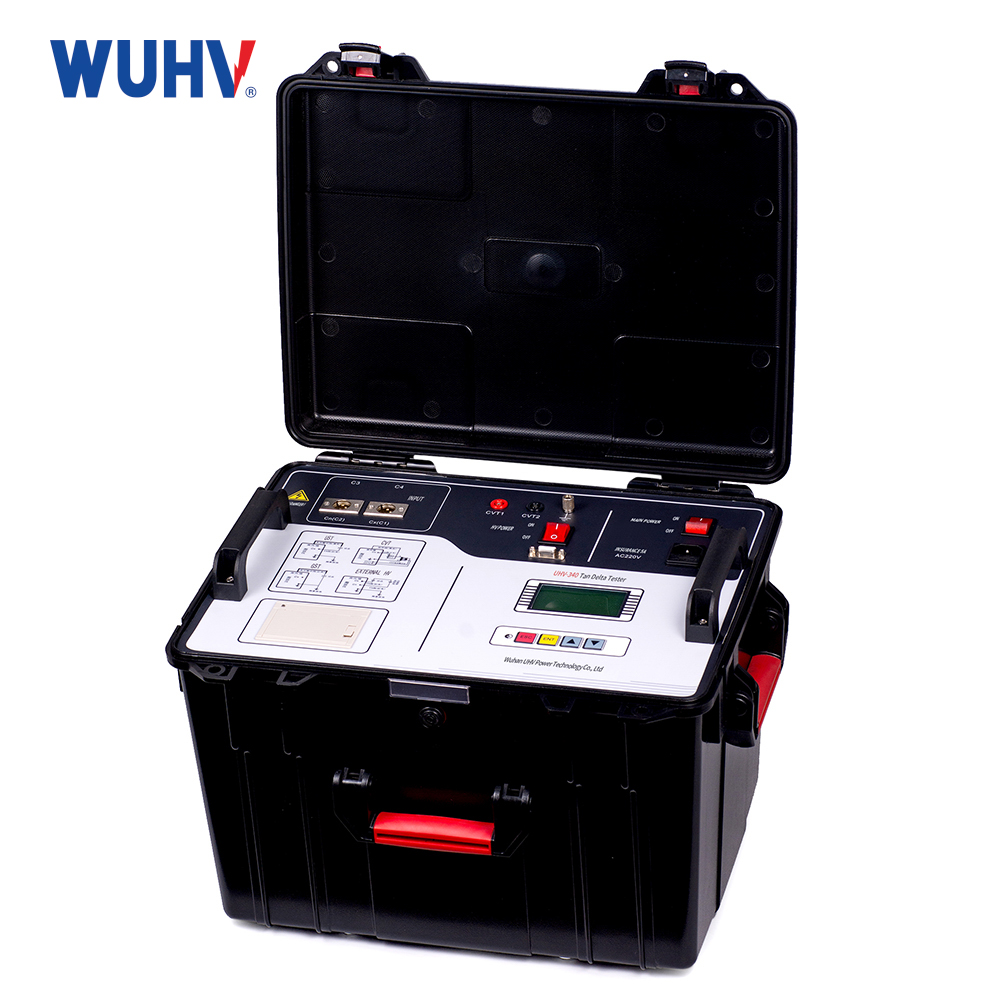


Product Introduction
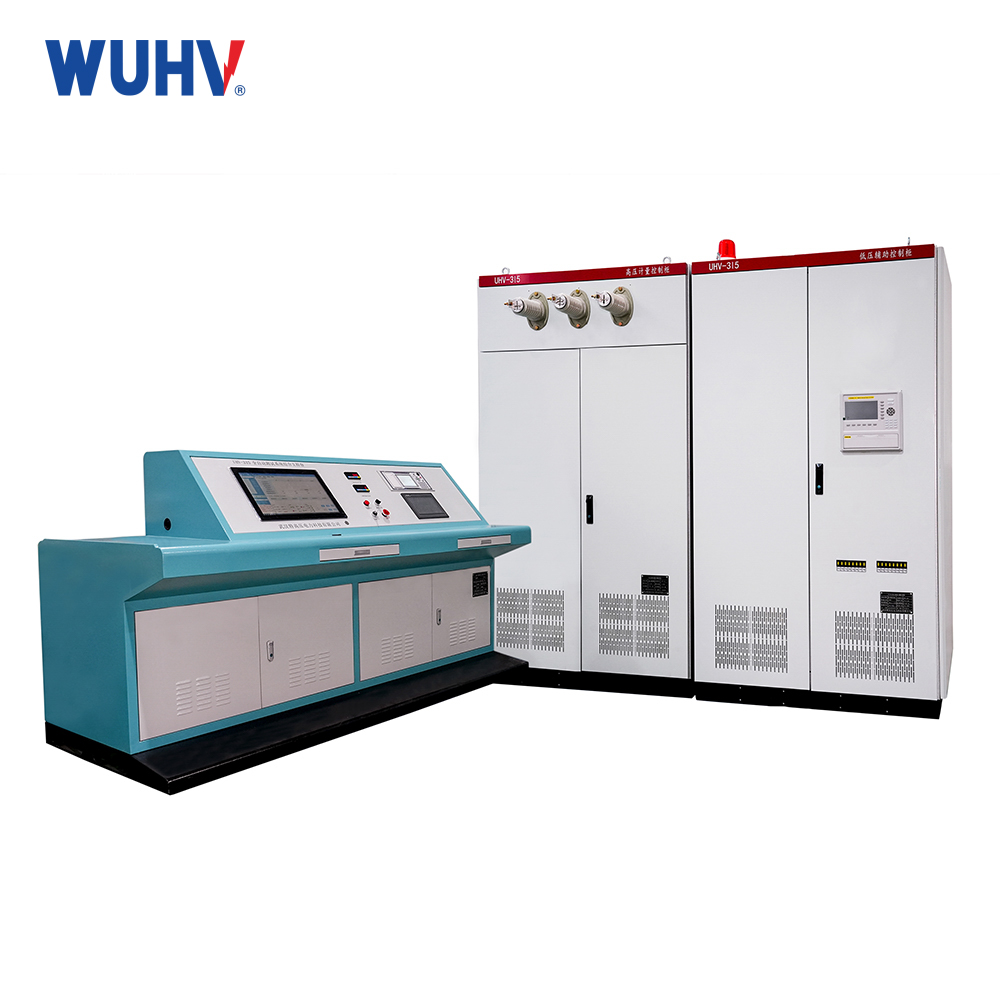
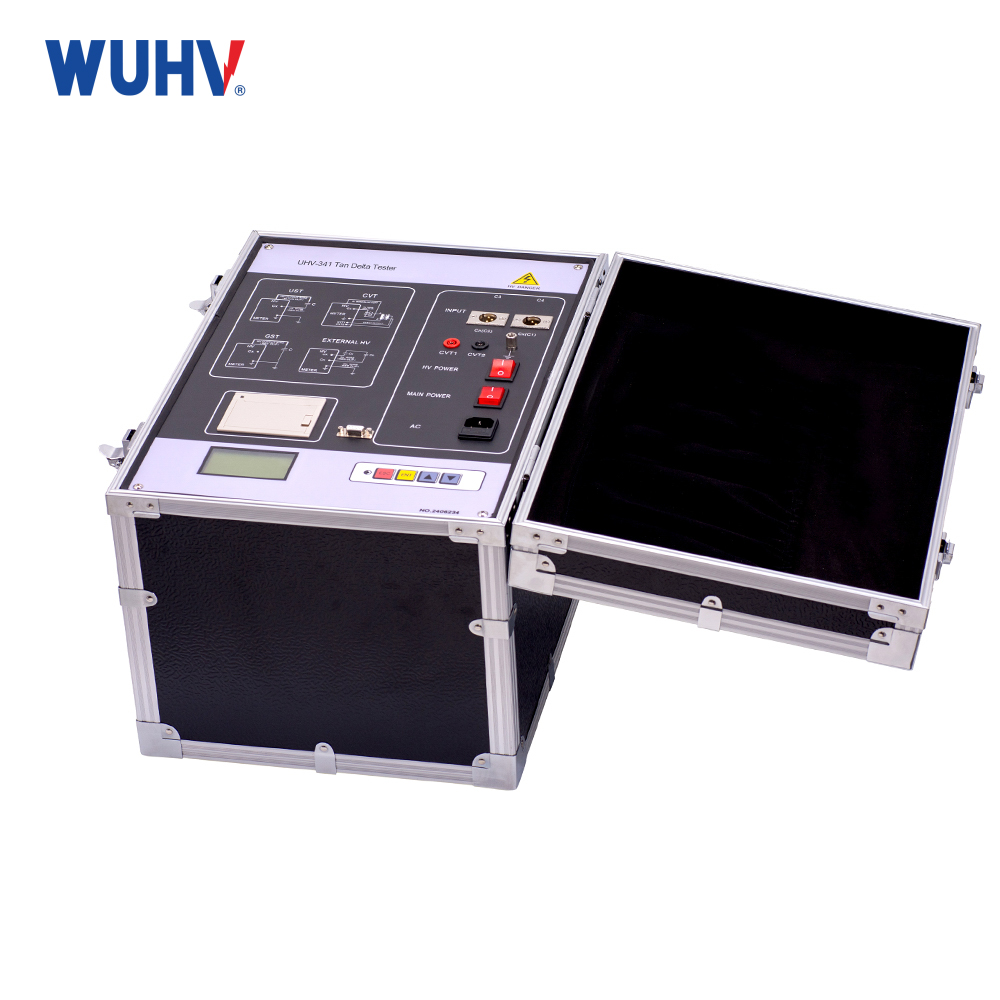
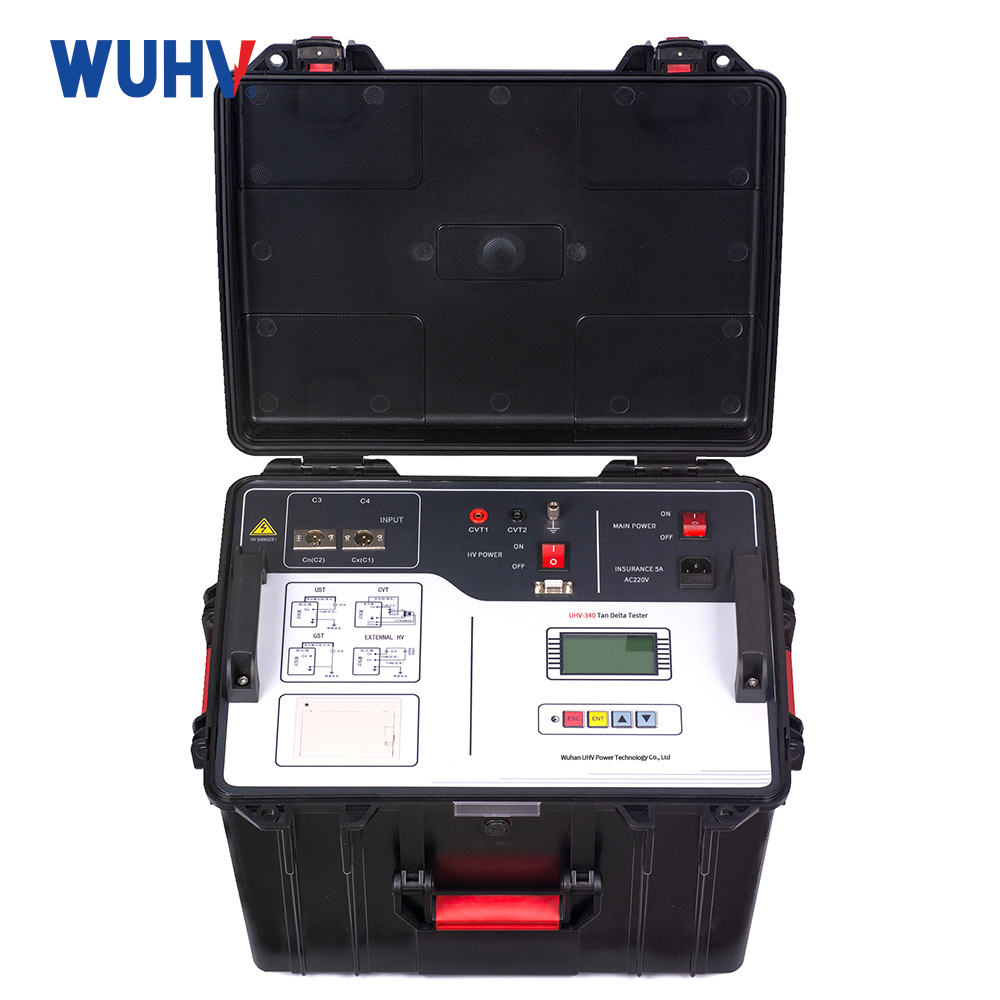
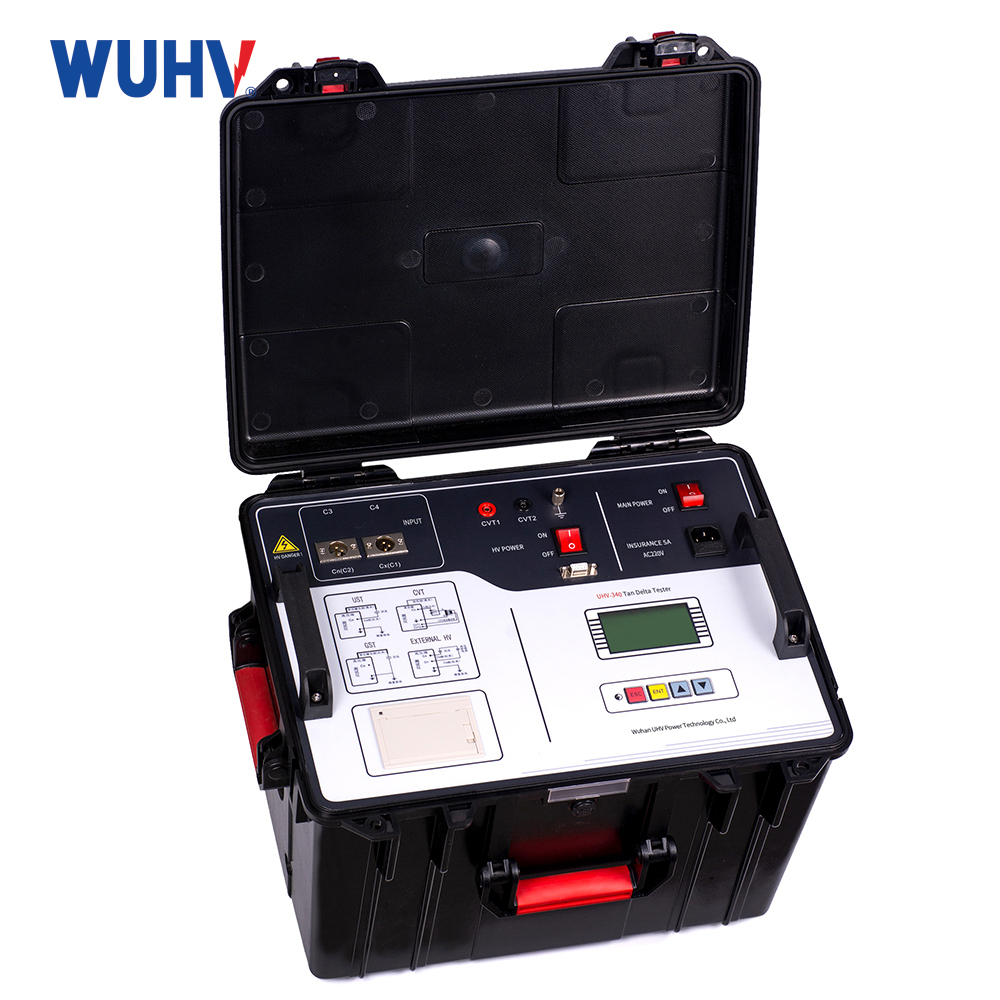
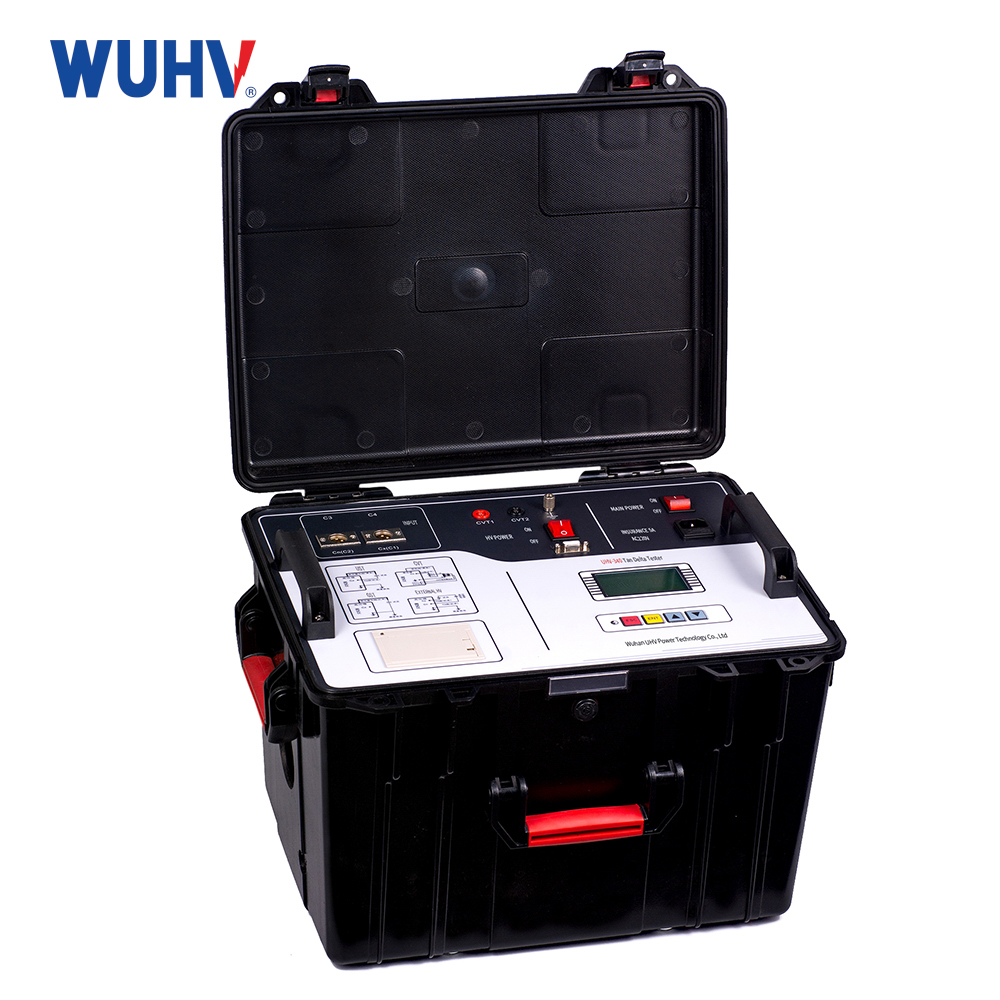
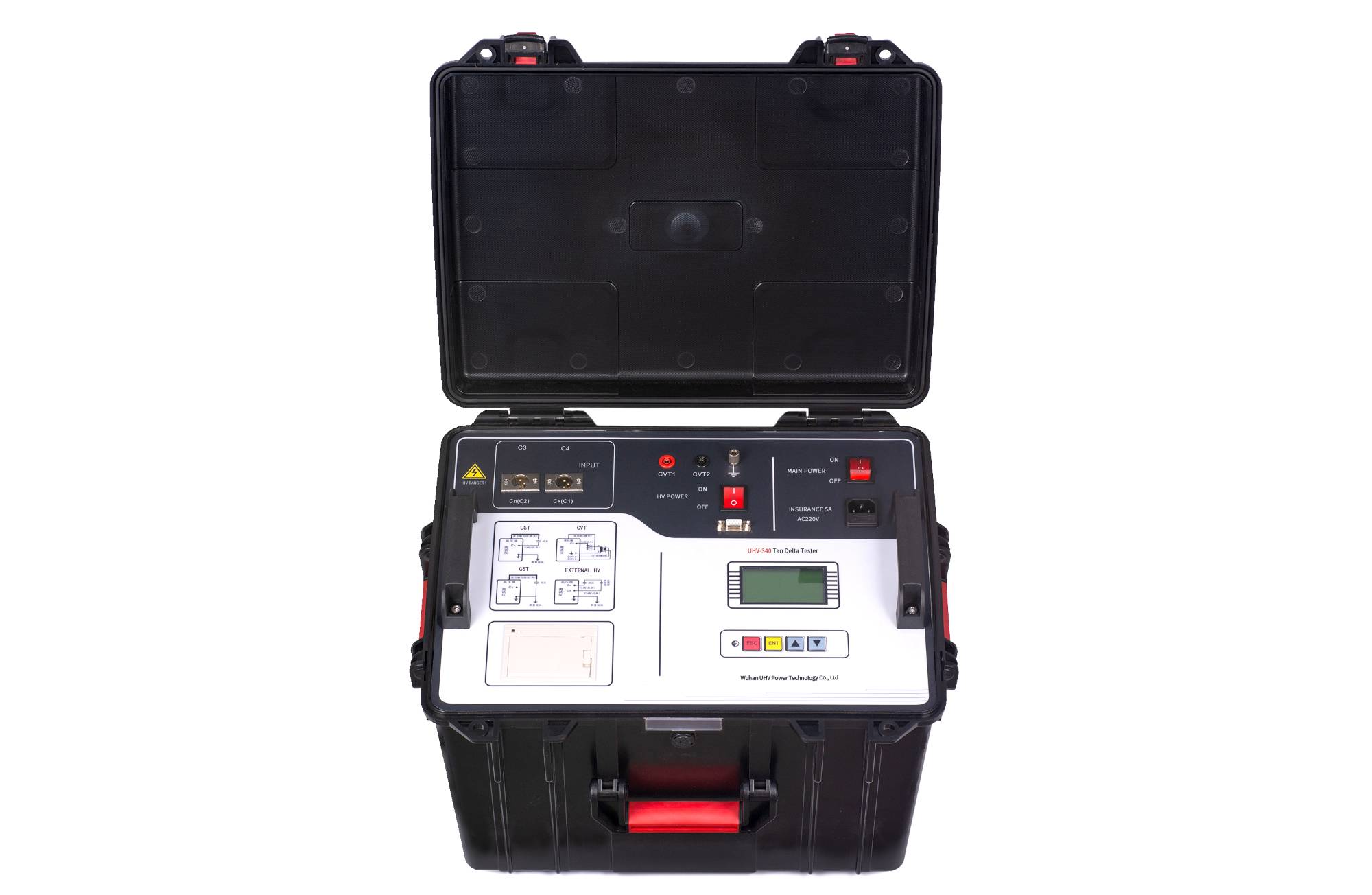
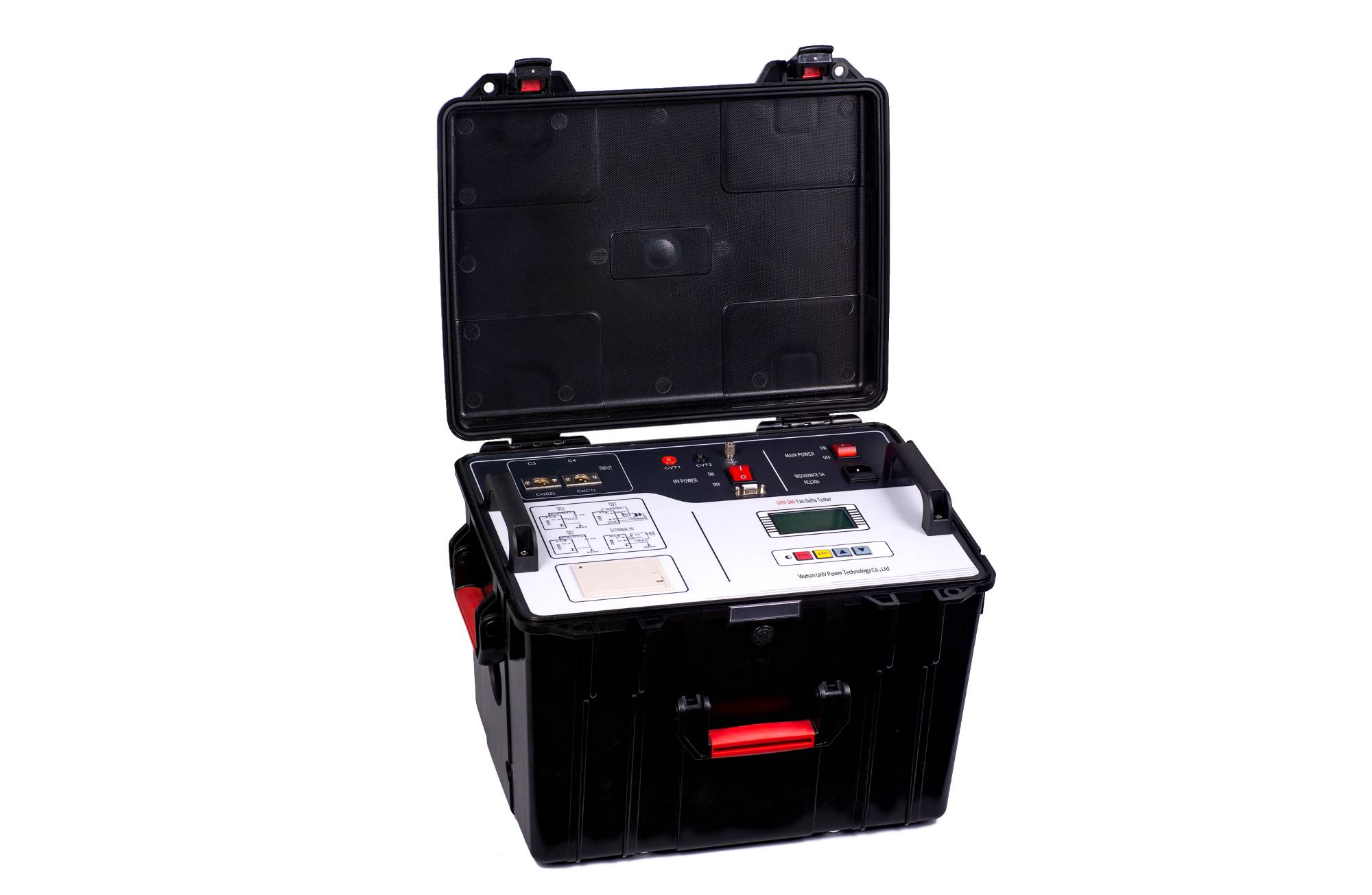
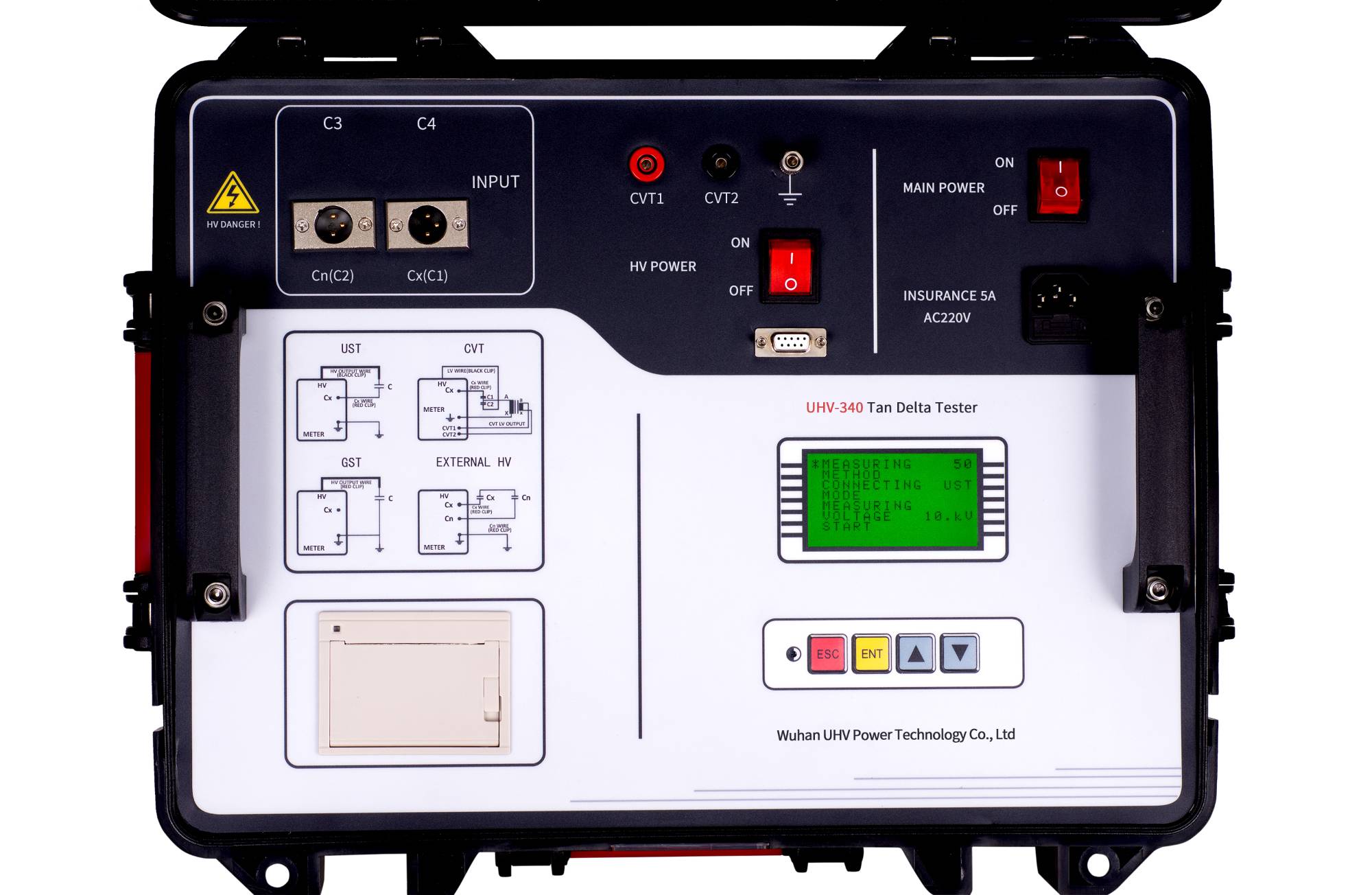
UHV-340 Transformer tan delta tester is a kind of instrument with high precision fully automatic measuring the dielectric loss tangent and capacitance of various high voltage electrical equipments in the power plants and substations. The adoption of frequency conversion technology could ensure the accurate measurement in the interference of strong electric field.
المعايير الفنية
| إخراج الجهد العالي | 0.5~10kV Increasing by 500V for each level, a total of 20 levels, capacity: 1500VA |
| دقة | tgδ: ± (reading * 1.5% +0.06%) |
| Cx: ± (القراءة * 1.5% +5 PF) | |
| دقة | tgδ: 0.001% Cx: 0.001pF |
| نطاق القياس | tgδ: 0.001% ~ 100% |
| Internal high pressure : 3PF~60000PF/10KV 60PF~1µF/0.5KV | |
| External high pressure: 3PF~1.5µF/10KV 60PF~30µF/0.5KV | |
| CVT Variable ratio test | Variation ratio measurement accuracy: ± reading *1% |
| The range of the measurement: 10~99999 | |
| Phase measurement accuracy: ±0.1° | |
| Phase measurement range: 0~359.9° | |
| مزود الطاقة | AC 220V ± 10% 50/60 ± 1Hz |
| طريقة القياس | a.single frequency: 45(45Hz measuring)、50(50Hz measuring)、55(55Hz measuring)、60(60Hz measuring)、65(65Hz measuring) |
| b.different frequency: 50D(45Hz/55Hz measure each time) 60D(55Hz/65Hz measure each time) Automatic frequency conversion | |
| التكيف التوافقي | ≤3% |
| حالة التطبيق | -15 ℃-50 ℃ |
| الرطوبة النسبية | <80% |
| البعد | 460 (L) × 345 (W) × 345 (H) |
| وزن | 35kg |
 |  |  |
Product Features:
1. تحويل التردد المضاد للتداخل: استخدام تكنولوجيا تحويل التردد المضادة للتداخل، في 200٪ من التداخل لا يزال من الممكن قياسه بدقة، وبيانات الاختبار مستقرة، ومناسبة لاختبار فقدان العزل الكهربائي المضاد للتداخل في الموقع.
2. قياس عالي الدقة: تحليل التردد العائم، تحليل الموجي الرقمي وتكنولوجيا المعايرة الذاتية للجسر، مع مكثف قياسي ثلاثي الأطراف عالي الدقة، لتحقيق قياس فقدان العزل الكهربائي عالي الدقة، ودقة قياس الاتصال الإيجابي/العكسي واستقراره ثابت.
3. جميع مقاومة إدخال النطاق للأداة أقل من 2Ω، مما يلغي تأثير السعة الإضافية لخط الاختبار.
4. يمكن توصيله بكوب الزيت الخارجي لإجراء اختبار فقدان عازل الزيت العازل الدقيق، ويمكن توصيله بقطب قياس المواد الصلبة لإجراء اختبار فقدان عازل العزل الكهربائي الدقيق.
5. التوافق الجيد: تحديد مصدر طاقة النظام 50 هرتز / 60 هرتز تلقائيًا، ودعم مصدر طاقة المولد، حتى لو كان تقلب التردد كبيرًا، ويمكن أيضًا قياسه بشكل طبيعي.
6. سلسلة مدمجة ومتوازية نوعين من نموذج قياس فقدان العزل الكهربائي، يمكن أن تكون متوافقة تمامًا مع منصة المعايرة ومعيار فقدان العزل الكهربائي، والتحقق من الأدوات المريحة.
7. حماية أمنية متعددة المستويات لضمان السلامة الشخصية والمعدات.
8. حماية الجهد العالي: اختبار ماس كهربائى، انهيار أو تقلب الجهد العالي الحالي، يمكن أن يقطع الإخراج عن طريق ماس كهربائى.
9. حماية الجهد المنخفض: سوء الاتصال 380 فولت، تقلب إمدادات الطاقة أو انقطاع التيار الكهربائي المفاجئ، حماية البدء، لن يسبب الجهد الزائد.
10.Grounding protection: the tan delta tester grounding is bad so that the shell with dangerous voltage, start grounding protection.
11.CVT: الجهد العالي والتيار، والجهد المنخفض والتيار أربعة حدود الحماية، لن تلحق الضرر بالمعدات؛ اختيار القائمة غير الصحيح لا ينتج جهد الإثارة. لا يوجد خرج جهد عالي 10 كيلو فولت أثناء قياس CVT.
12. مكافحة "ارتفاع السعة": عند قياس منتجات الاختبار ذات السعة الكبيرة ستظهر تأثير ارتفاع الجهد "ارتفاع السعة"، يمكن للأداة تتبع جهد الخرج تلقائيًا، والحفاظ على جهد الاختبار ثابتًا.
13. الأداء الزلزالي: يعتمد الجهاز تصميمًا زلزاليًا فريدًا، ويمكنه تحمل اهتزاز النقل القوي لمسافات طويلة، والاضطراب دون ضرر.
14. كابل الجهد العالي: سلك معزول عالي الجهد، يمكن استخدامه لمسح الأرضية.
15. اختراق تقني، وظيفة قوية، مع واجهة مكثف قياسية خارجية، تتبع تلقائي لتردد طاقة الاختبار الخارجي 40 هرتز ~ 70 هرتز، دعم مصدر طاقة التردد وإمدادات الطاقة الرنانة المتسلسلة لإجراء اختبار فقدان عازل الجهد العالي ذو سعة كبيرة.
16.With دائرة الاتصال وظيفة موجه التفريغ سيئة، لتسهيل تحديد الأسلاك يمكن الاعتماد عليها.
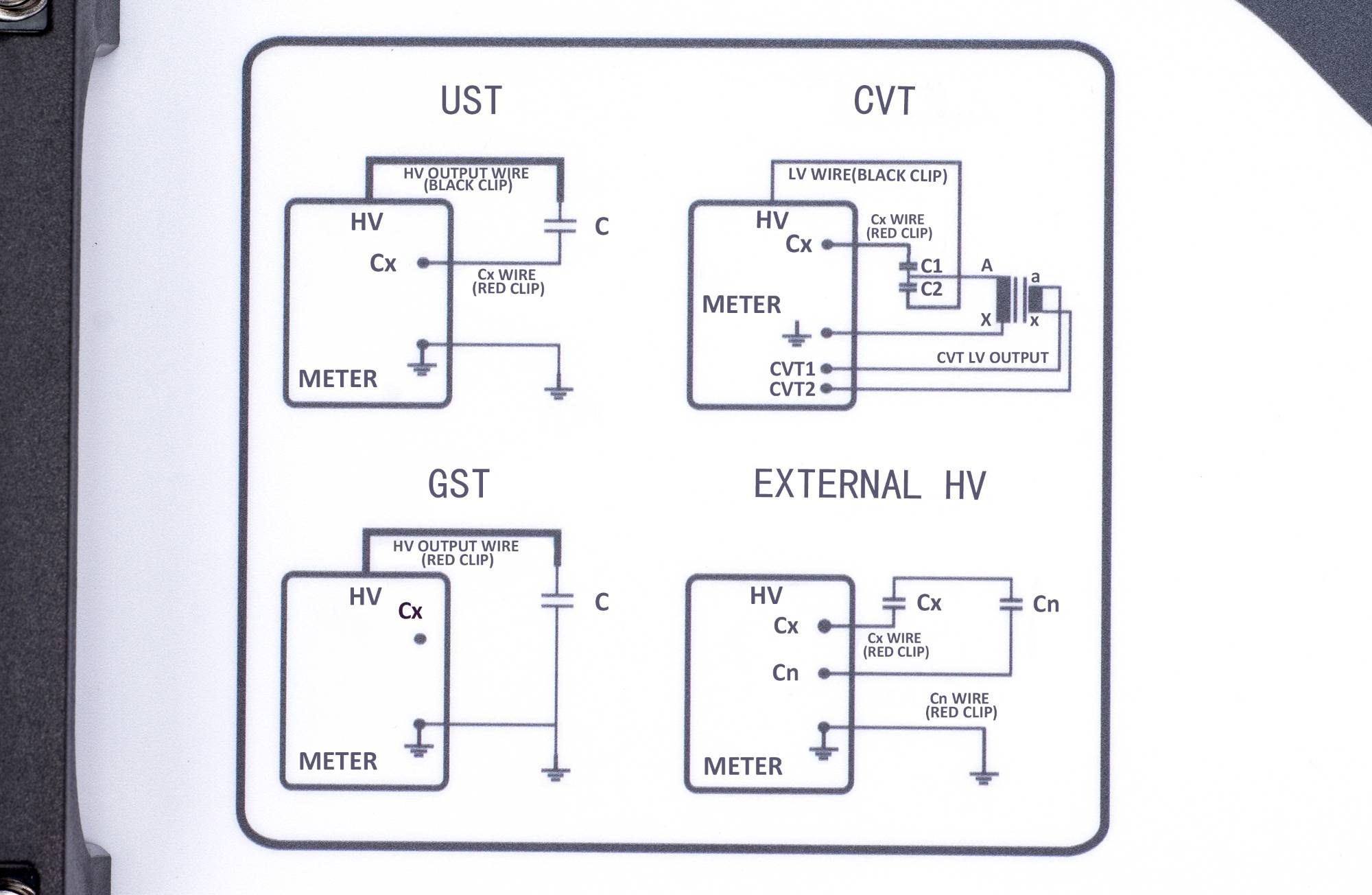
17. مع وظيفة قياس طريقة الإثارة الذاتية CVT، يمكن قياس C1/C2 في نفس الوقت، التأريض التلقائي لقضيب التعويض وتأثير الجهد الجزئي للمكثف القياسي، لا حاجة لتغيير الخط وأي ملحقات خارجية، ويمكن لخط اتصال الجهد العالي مسح الارضية.
18. مع وظيفة التدريع ذات الجهد المنخفض للأسلاك العكسية، في علبة التأريض لقضيب التوصيل 220kVCVT، يمكن تنفيذ C11 دون تجريد قياس فقدان عازل الأسلاك العكسية 10kV، ويمكن أن يكون اتصالًا في نفس الوقت لقياس السعة الرئيسية والتابعة.
19.English text menu, large screen backlight LCD display.
20. تكوين الطابعة الحرارية، طباعة البيانات واضحة وسريعة، لا ضوضاء.
21. مع ساعة التقويم، يمكن تخزين 100 مجموعة من بيانات القياس.
 |  |  |
Factors affecting dielectric loss
The characteristics of the material itself: the chemical composition, molecular structure, moisture content, impurities, etc. of the insulation material will directly affect its dielectric loss.
Temperature: An increase in temperature usually leads to an increase in the polarity movement of molecules, resulting in an increase in dielectric loss.
Electric field strength: Within a certain range, the higher the electric field strength, the higher the dielectric loss may also increase.
Humidity: Moisture is the "enemy" of insulation materials, which significantly increases their dielectric loss.
Frequency: The frequency of alternating current also has an impact on dielectric loss, which is the origin of the name "heterodyne" tester. tan delta tester factory can conduct tests at different frequencies to more comprehensively evaluate insulation performance.
Application Fields
1. Power industry
Power plants and substations: In power plants and substations, dielectric loss tester is mainly used to test the high-precision measurement of dielectric loss tangent and capacitance of various high-voltage power equipment. Its integrated structure and built-in components such as dielectric loss testing bridge, variable frequency voltage regulating power supply, step-up transformer, and SF6 high stability standard capacitor make the testing process more accurate and efficient.
2. Research institutions
Research on High Voltage Electrical Equipment: The dielectric loss tester supplier is suitable for measuring the TG δ and capacitance of high-voltage electrical equipment in workshops, laboratories, and research institutions. Its multiple testing modes (such as internal high voltage, external high voltage, internal standard, external standard, positive connection method, reverse connection method, etc.) can meet different testing needs.
3. In the field of electronic manufacturing
Electronic device design and production: In the design and production process of electronic devices, a dielectric loss tester can measure the dielectric loss at different frequencies to obtain the loss characteristics of the dielectric at different frequencies. This has a significant impact on the working state and performance of the circuit.
4. Insulation material testing
Insulation oil test: Equipped with an insulation oil cup, the dielectric loss tester manufactures can test the dielectric loss of insulation oil. It is more sensitive to detecting distributed defects such as overall moisture and aging of insulation or air gap discharge defects in insulation.
Frequently Asked Questions (FAQ)
Q: What types of power equipment is the variable-frequency dielectric loss tester mainly used for?
A: It is widely used for testing various high‑voltage power equipment such as transformers, instrument transformers, cables, switchgear, and insulators.
Q: Is a lower dielectric loss tangent (tan δ) value always better?
A: Yes, a lower tan δ value generally indicates lower dielectric loss of the insulating material, better insulation performance, and a lower risk of failure.
Q: What effect does temperature have on dielectric loss test results?
A: Generally, an increase in temperature enhances molecular polar motion, which leads to higher dielectric loss. Therefore, the actual temperature should be recorded and taken into account during testing.
Q: Besides the variable‑frequency dielectric loss tester, what other methods can be used to evaluate insulation performance?
A: Other methods include DC withstand voltage tests, partial discharge detection, dissolved gas analysis in oil, and various other approaches to comprehensively assess insulation performance.
Q: What advantages does Wuhan UHV Power Technology Co., Ltd. have in the field of power testing?
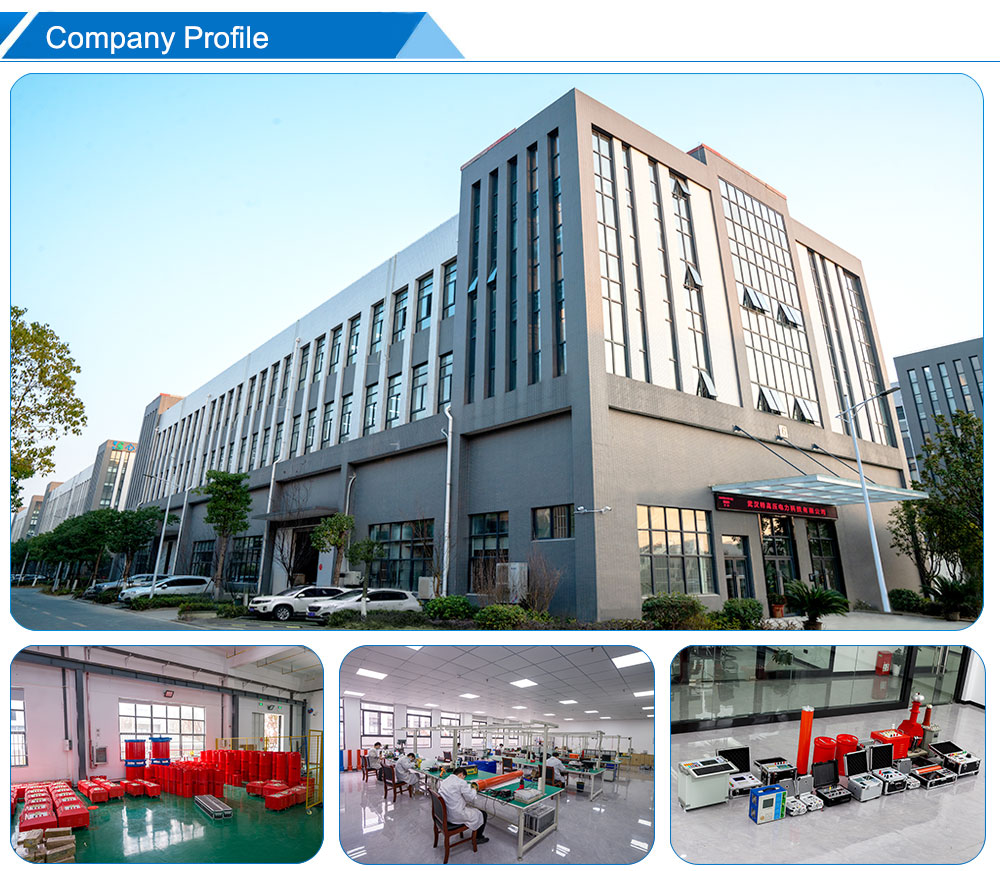
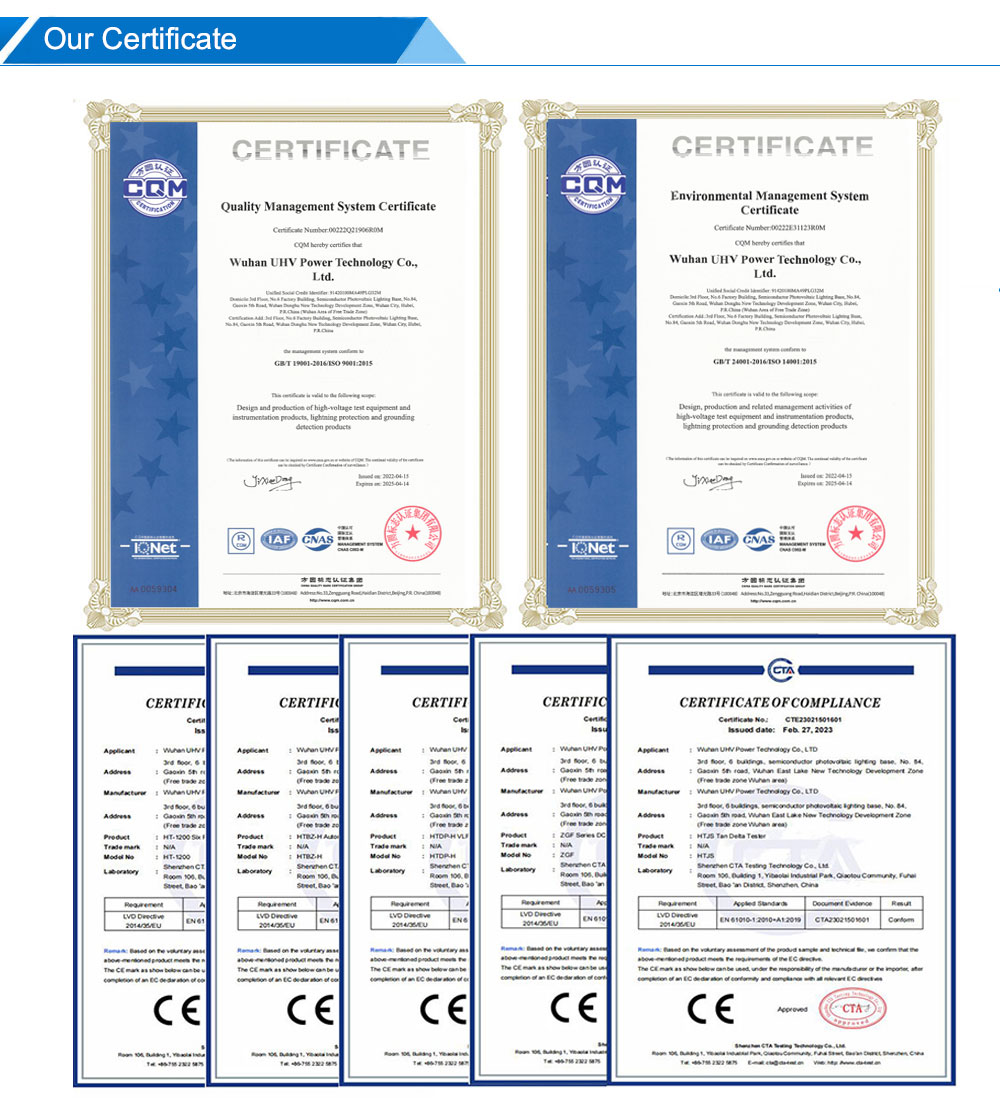
A: Wuhan UHV Power Technology Co., Ltd. has many years of industry experience, strong R&D capabilities, high product accuracy, stable performance, and provides professional pre‑sales and after‑sales services, making it a trustworthy partner.