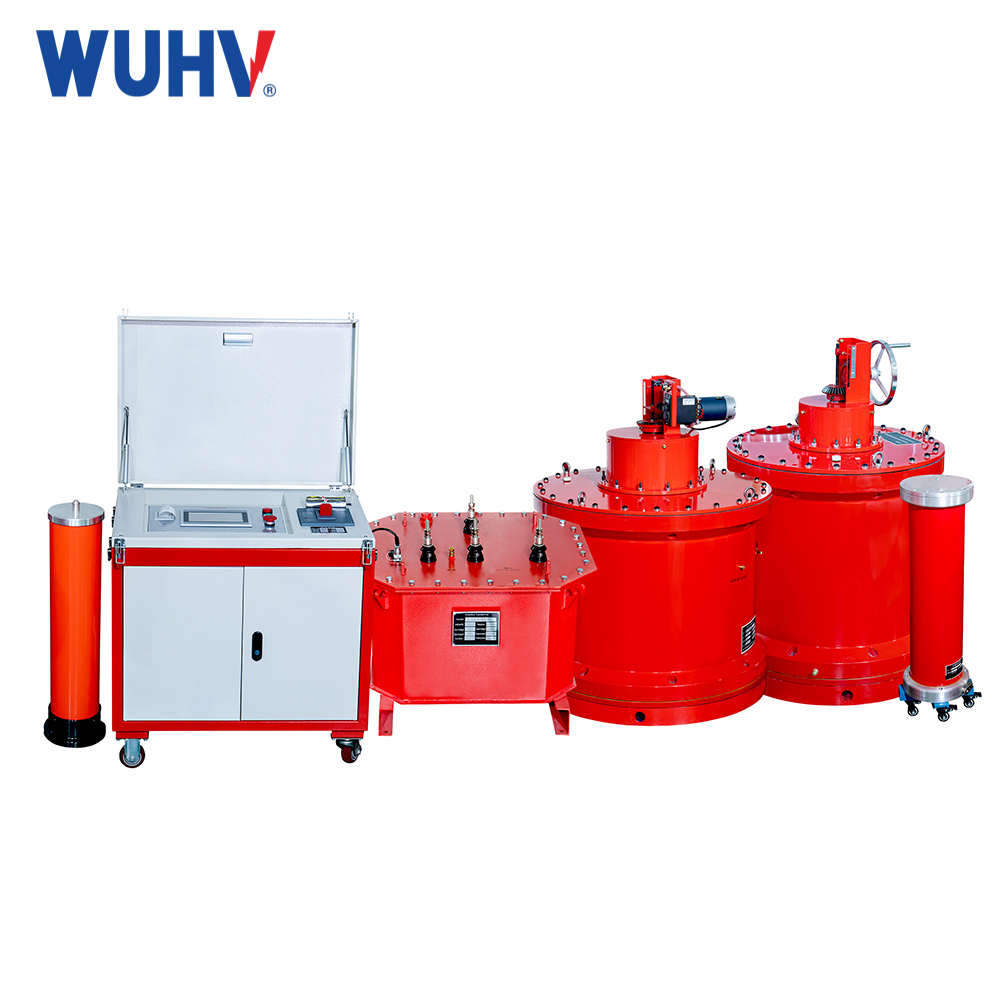
In the process of factory inspection and maintenance testing of motors, the selection of testing benches directly affects the reliability of data and the safety of equipment operation. The idea proposed by Wuhan UHV Power Technology Co., Ltd. in its motor comprehensive test bench product system is to first lock the tested object, then reverse match the testing capability and accuracy indicators of the testing platform, and finally use service guarantees to cover long-term usage costs. This logic has a clear implementation basis in the technical parameters and design principles of the product page.
The first step is to see if the test bench can cover your motor spectrum.
The most important thing when selecting a motor is to first consider its price or appearance, and instead list the type of motor, rated voltage, and rated power range that the unit needs to test. Taking the UHV-316 motor comprehensive test bench as an example, its testing capabilities cover low-voltage three-phase asynchronous motors ranging from 230V to 660V and 3kW to 1250kW, high-voltage three-phase asynchronous motors ranging from 3kV to 13.2kV and 50kW to 8000kW, as well as DC motors below DC800V and 100kW to 800kW. If a test bench cannot cover the main models, even the highest precision in the future cannot be achieved. The product page also indicates that the test bench meets the factory and maintenance testing requirements for three-phase asynchronous motors with a rated voltage of 380-10000V and a rated power of 1-15000kW. This span itself is the "coverage red line" when selecting.
The second step is to ensure that the accuracy indicators match the testing objectives.
The data requirements for factory testing and R&D calibration are not the same. The accuracy benchmark provided by UHV-316 is: the accuracy of AC voltage, AC current, DC measurement, and DC resistance is ± 0.2% FS, the temperature accuracy is ± 1 ℃, and the frequency accuracy is ± 0.1Hz. When selecting, it should be asked whether these accuracy indicators cover every parameter that needs to be read in practice, whether the lower limit of the range is "low enough", and whether the upper limit is "sufficient". For example, the measurement range for low-voltage AC current is 1-1200mA, high-voltage AC is 1-500A, DC is 1-500A, and DC resistance is 0.005-2000 Ω. If daily testing is concentrated in the middle range of a certain range, the accuracy margin is sufficient; If the range boundary is frequently touched, the matching degree needs to be re evaluated.
Step three, check if the design principles are aligned with the usage scenario.
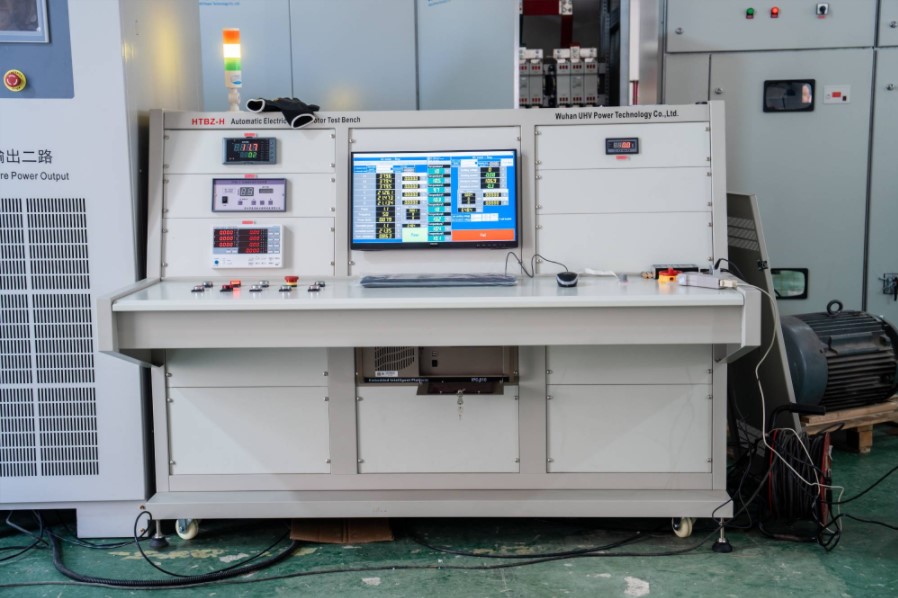
The test bench is not an isolated instrument, but a system that requires personnel operation, long-term operation, and later expansion. The product page clearly lists "safety, reliability, economy, practicality, ease of operation, and scalability" as design principles, and adopts a measurement and control architecture of industrial control computer+PLC control+digital display measuring instrument. When selecting, these six principles can be compared with actual working conditions one by one: production lines with high operating frequency place more emphasis on ease of operation and reliability; The laboratory end that may be added to the experimental project in the future should focus on scalability. The test bench is a non-standard design designed for Party A based on technical requirements and combined with the actual testing of motor types, capacities, and test items. This means that selection is not about picking a standard product from the shelf, but rather the process of transforming one's own requirements into a technical agreement.
Step four, incorporate after-sales response capability into the selection decision.
Once the motor test benchis put into use, the shutdown cost is often much higher than the equipment itself. The after-sales commitment announced by Wuhan UHV includes: professional technical problem response, technical data mailing, simple fault telephone guidance and troubleshooting, and one-year free warranty (as otherwise agreed in the contract). These time limits are easily overlooked during the selection phase, but they directly determine the availability of the equipment throughout its entire lifecycle. When selecting, "how long after a fault can the testing capability be restored" should be evaluated as a hard indicator alongside accuracy and range.
Overall, the core action of selecting a motor test bench can be summarized as a chain: the parameters of the tested motor determine the lower limit of the testing capability, the testing purpose determines the accuracy level, the usage scenario determines the design focus, and the service guarantee determines the long-term holding cost. The UHV-316 product page of Wuhan UHV does not provide a "multiple-choice answer", but a set of comparable and verifiable parameter frameworks - from voltage and current range to accuracy indicators, from design principles to non-standard customization paths, each item points to the same selection principle: let the testing platform serve the testing requirements, rather than letting the testing requirements accommodate the testing platform.