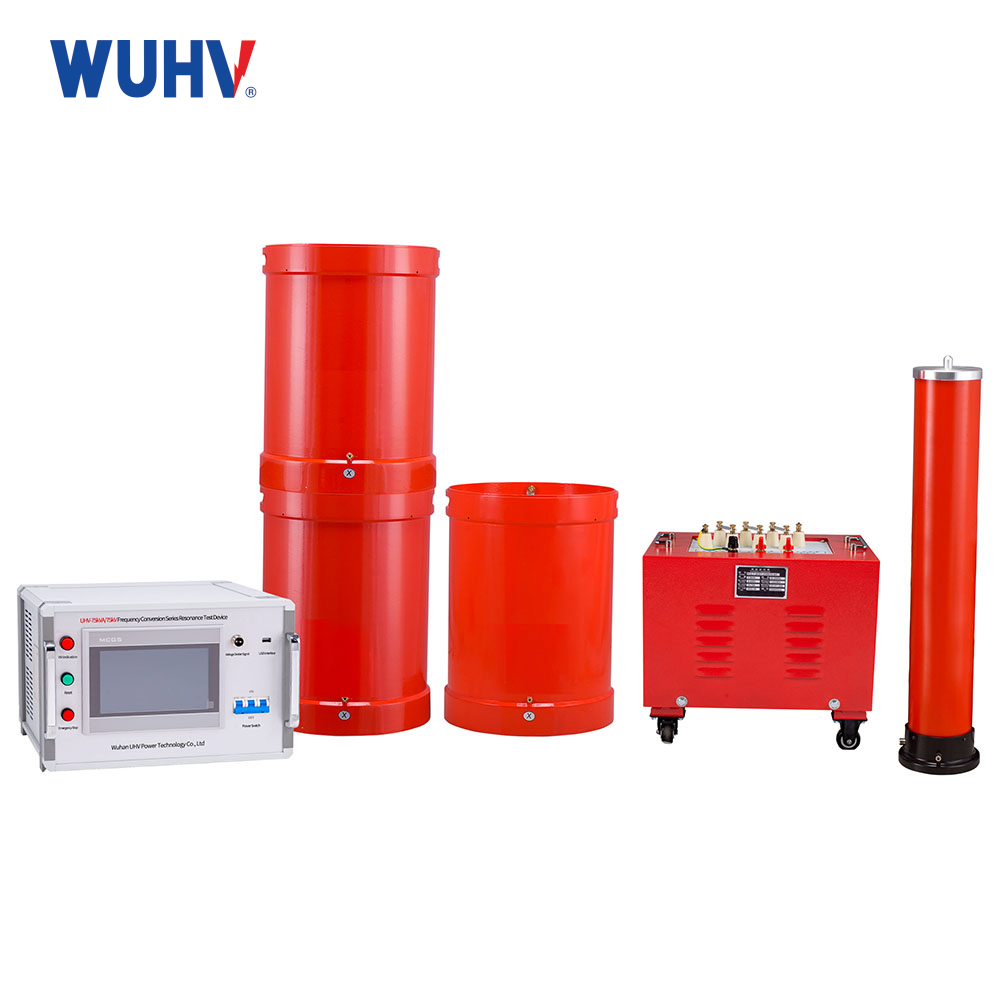
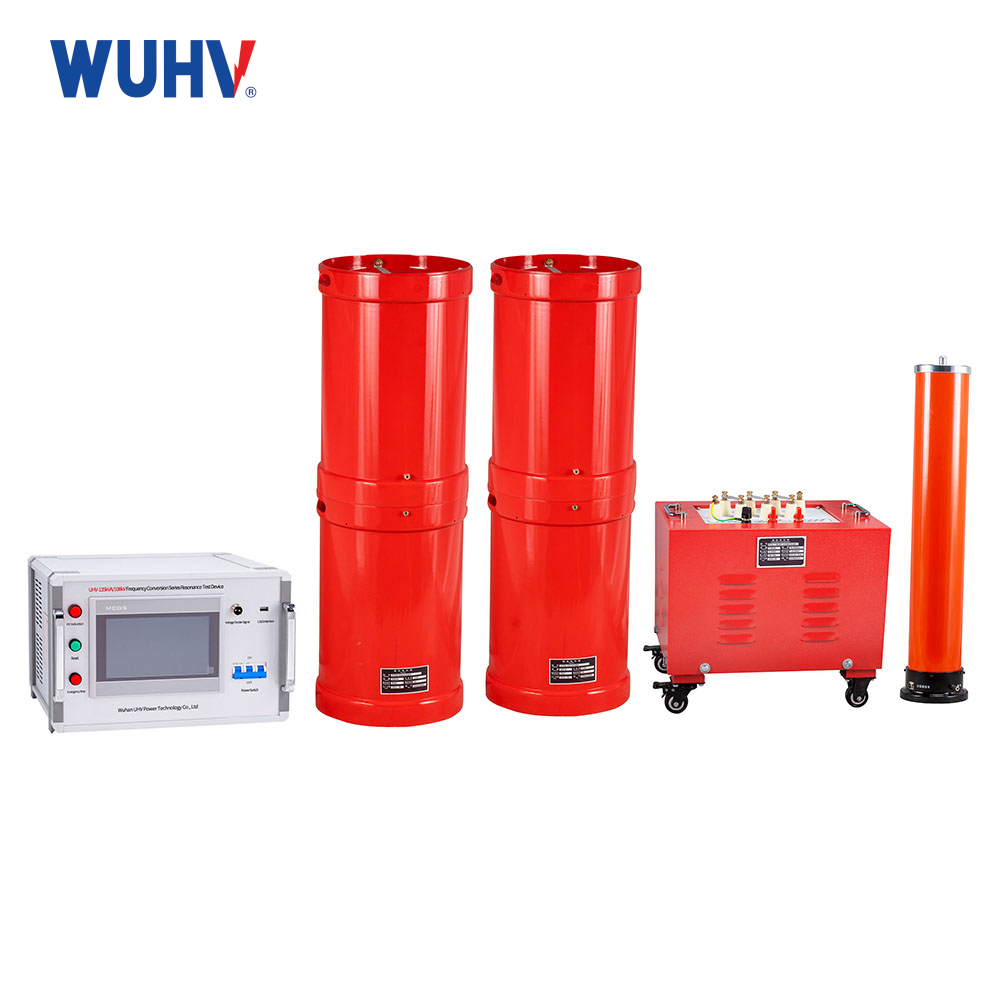
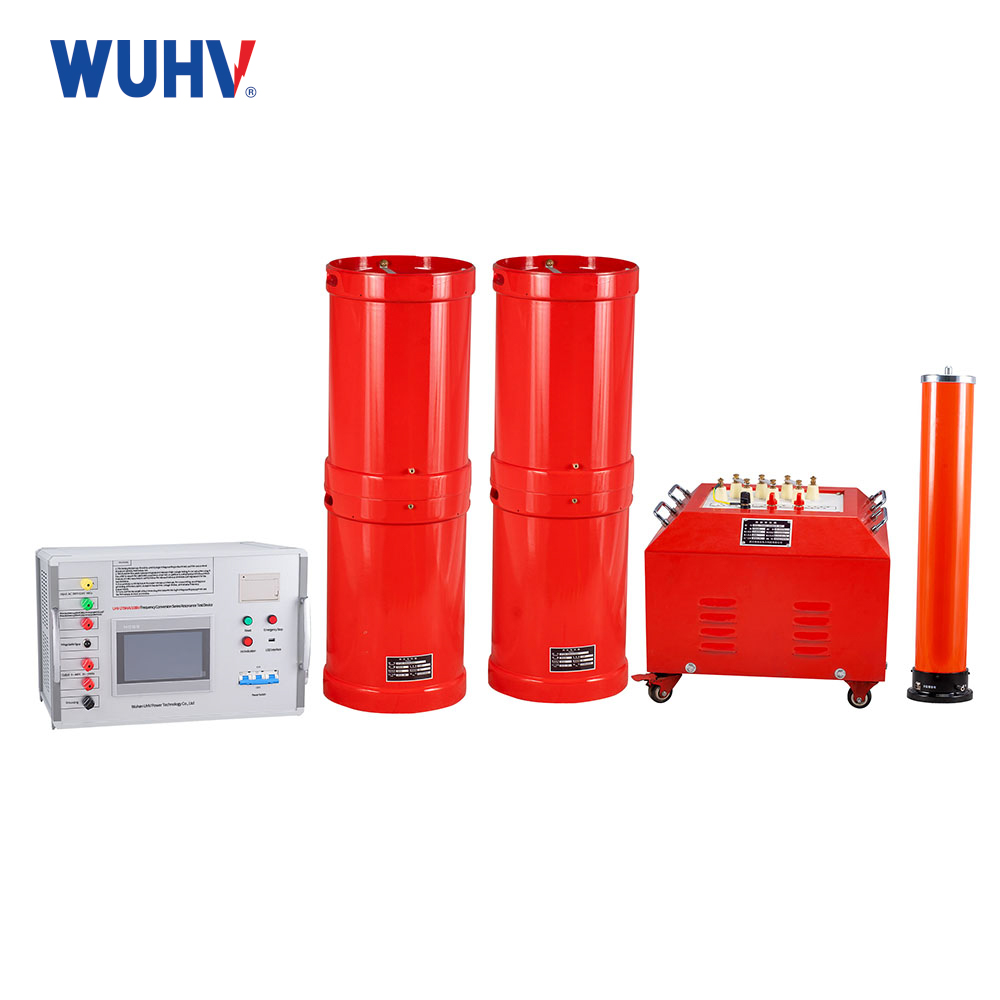
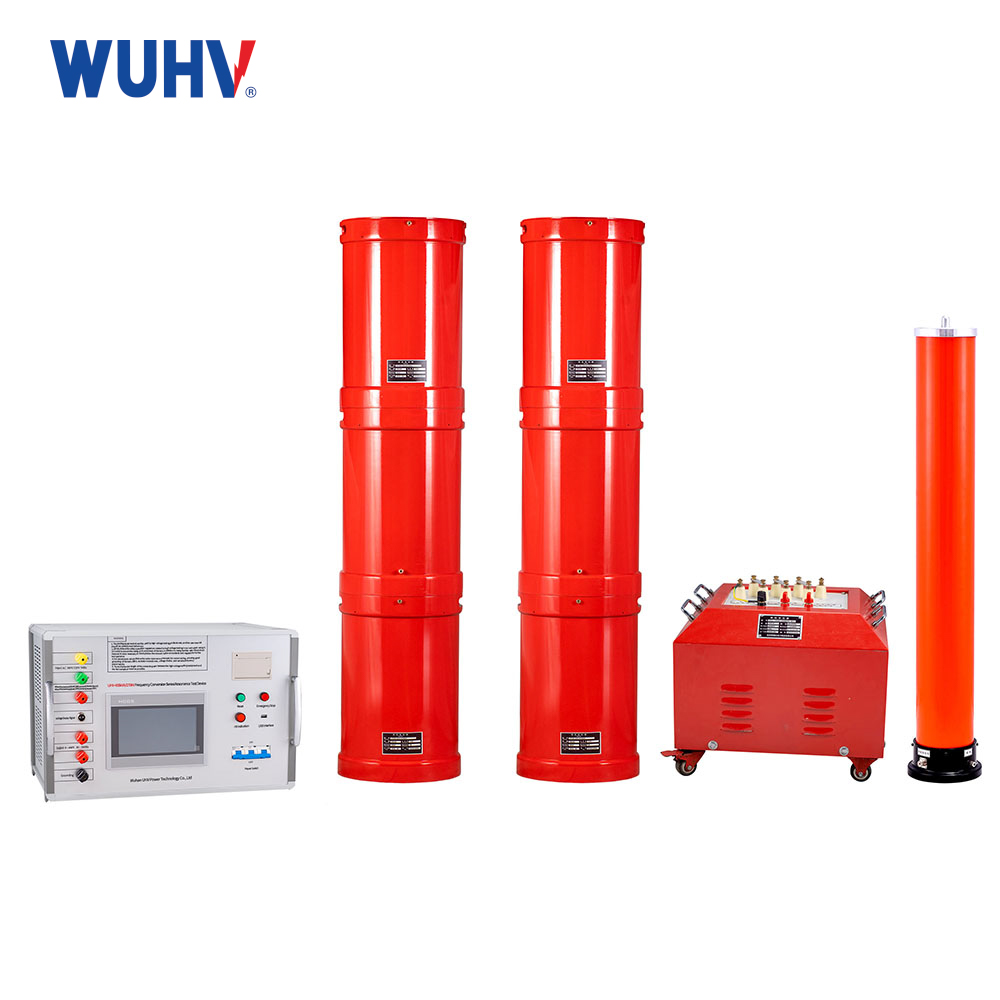
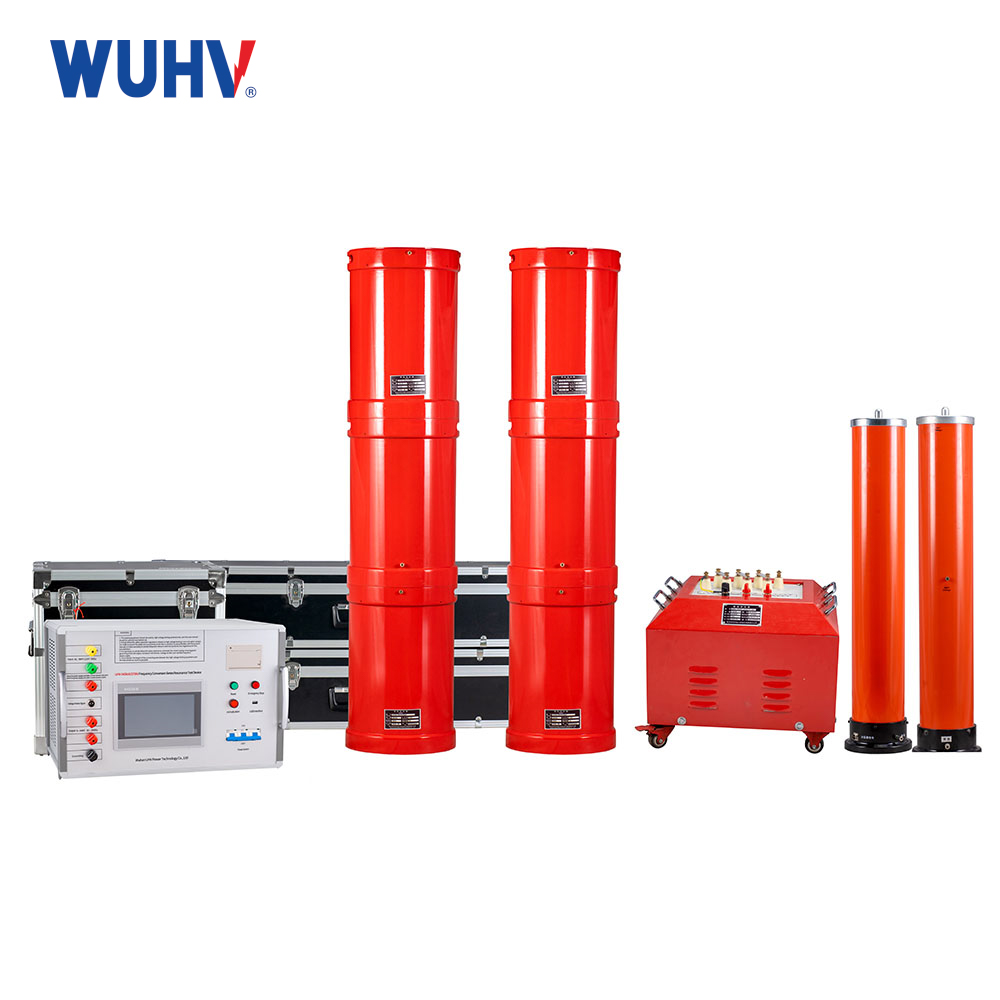
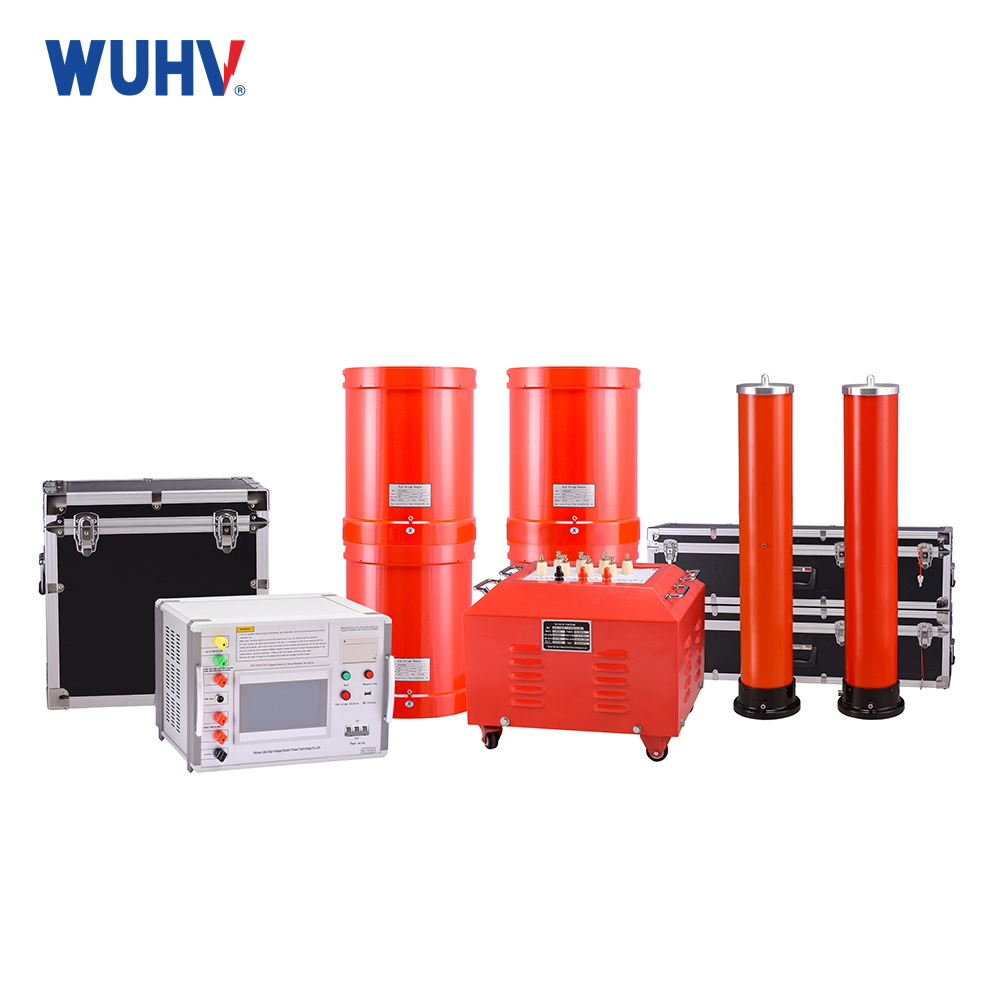
نظام اختبار الرنين من سلسلة AC لتحويل التردد UHV
Product Introduction
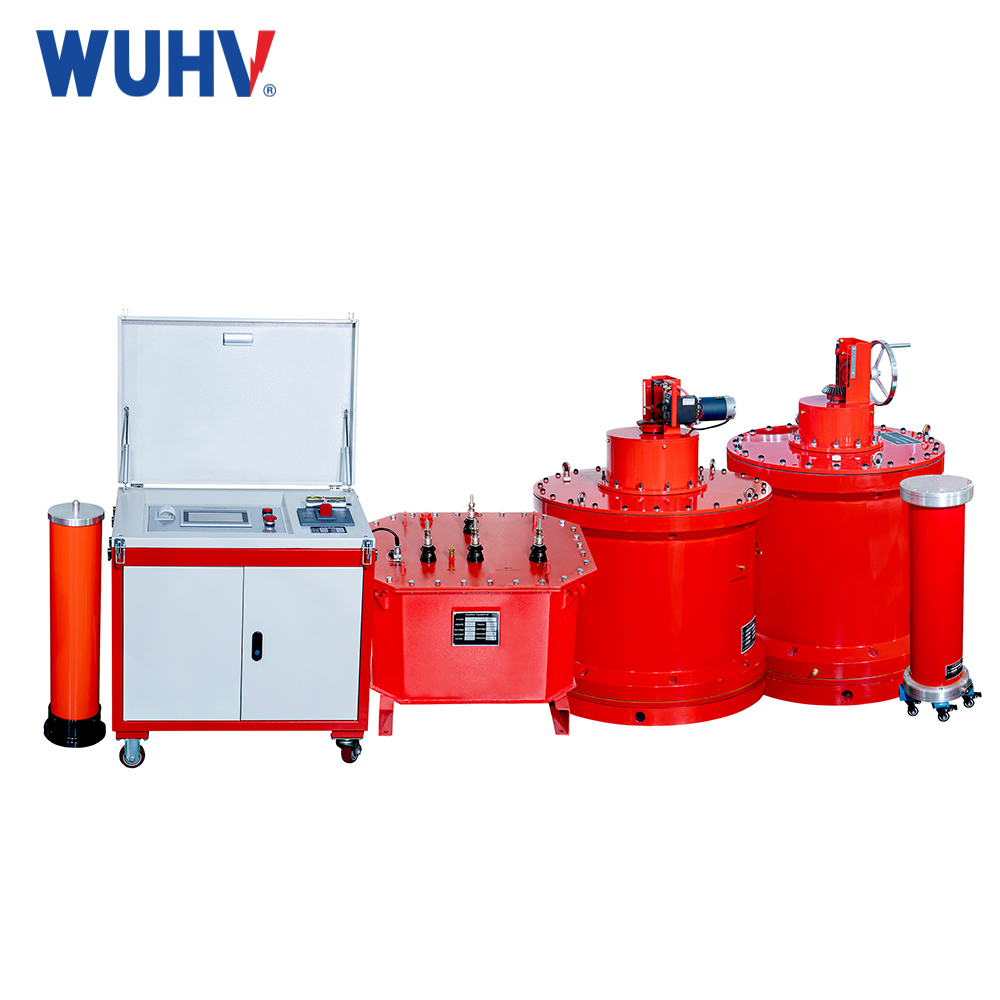
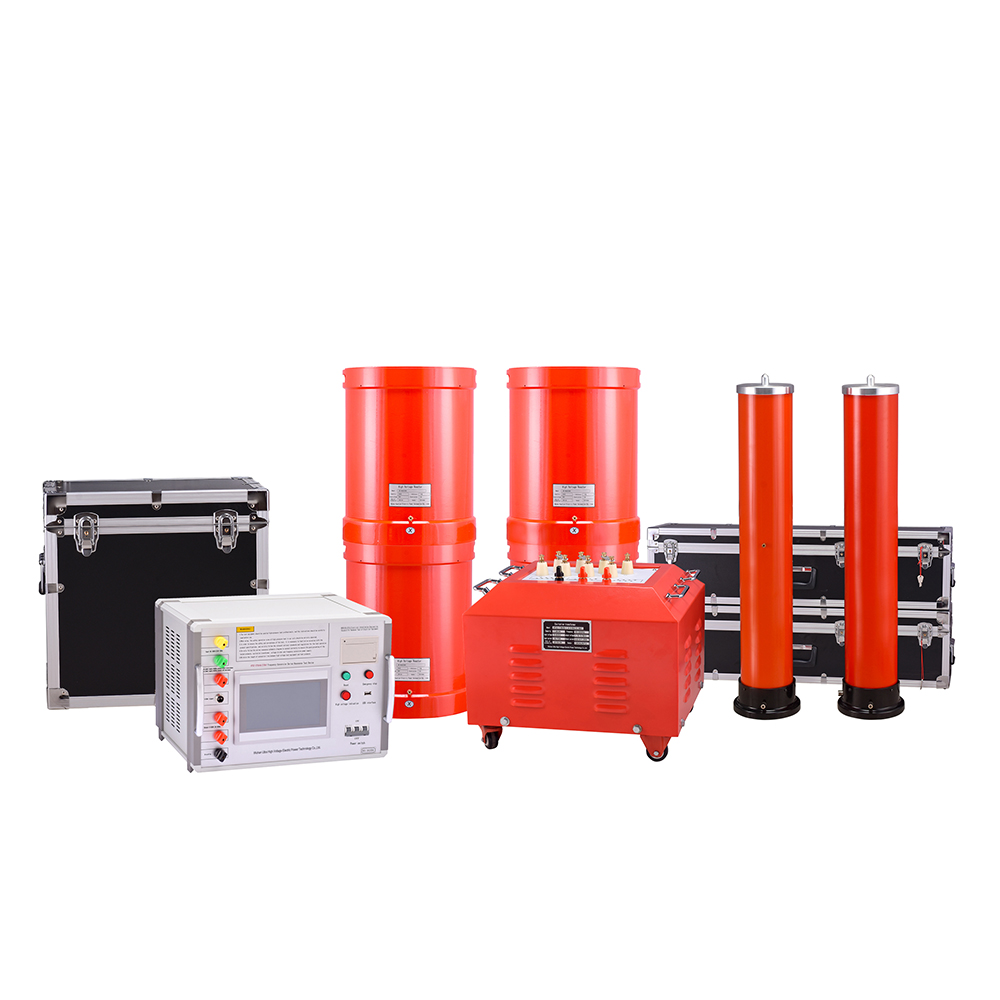
The UHV series resonant system manufactures is suitable for large-capacity, high-voltage capacitance testing and preventive tests, featuring multiple protection functions such as over-voltage, over-current, zero-start, and the system detuning (flashover). Adopting DSP platform technology, the entire unit is lightweight and convenient for on-site use.
معلمات المنتج
Technical parameter
| تصنيف الجهد الناتج | 0~1000kV and below |
| تردد الخرج | 30~300Hz |
| Resonance voltage waveform | Pure sine wave, waveform distortion rate≤1.0% |
| وقت العمل | Full power continuous working time of 60min |
| عامل الجودة | 30~90 |
| حساسية تنظيم التردد | 0.1 هرتز |
| عدم الاستقرار | <0.05% |
| إمدادات الطاقة العاملة | مرحلة واحدة 220 فولت أو ثلاث مراحل 380 فولت ± 10٪ |
| تردد الطاقة 50 هرتز ± 5% |
Serial product configuration(Application range (10kV ~ 500kV voltage grade substation electrical equipment ac withstand voltage equipment, frequency 30 ~ 300Hz))
| Product model name | مصدر التردد المتغير | مفاعل الرنين | Exciter transformer | مقسم الفولت | نطاق التطبيق |
| UHV-50/50 | 4 كيلو واط | 25kV/1A two(dry) | 4kVA(dry) | 50 كيلو فولت | 1000kVA and below 10kV power transformer. 10kV switch , bus, PT, CT, etc. 10 kv (300mm2) cable 1.0 km or less |
| UHV-108/108 | 6 كيلو واط | 27kV/1A four(dry) | 6kVA(dry) | 110 كيلو فولت | 31500kVA and below 35kV power transformer. 35kV switch , bus, PT, CT, etc. 10 kv (300 mm2)cable≤2km.35kV (300mm2)cable≤0.5km |
| UHV-200/200 | 10 كيلوواط | 50kV/1A four(dry) | 10kVA(dry) | 200 كيلو فولت | 50000kVA and below 110kV power transformer.110kVGIS、PT、CT etc.(Preventive test).35kV(300mm2)cable≤1.0km.10kV (300mm2)cable≤2.0km |
| UHV-270/270 | 15 كيلو واط | 45kV/1A Six sets of(dry) | 15kVA(dry) | 300 كيلو فولت | 50000kVA and below 110kV power transformer.110kVGIS、PT、CT etc..35kV(300mm2)cable≤1.2km.10kV (300mm2)cable≤3.0km |
| UHV-800/400 | 30 كيلو واط | 50kV/2A eight(dry); 100kV/2A four(oil-immersed) | 30kVA(dry); 30kVA(oil-immersed) | 400 كيلو فولت | 80000kVA and below 220kV power transformer.50000kVA and below 110kV power transformer.110kV/220kVGIS、PT、CT etc..35kV(300mm2)cable≤2.0km.110kV (300mm2)cable≤0.7km |
| UHV-1600/800 | 60 كيلوواط | 200kV/2A four(oil-immersed) | 60kVA(dry) | 800 كيلو فولت | 220kV power transformer of 80000kVA and below.50000kVA and below 110kV power transformer.500kVGIS、PT、CT etc..220kV switch 、GIS、PT、CT etc..110kV(400mm2)cable≤1.5km.220kV (400mm2)cable≤1.0km |
Key Advantages
1、Comprehensive Safety: Equipped with multi-stage protection (overvoltage, overcurrent, zero-start, and flashover detuning), featuring user-adjustable protection thresholds to safeguard both the sample and the device.
2、Enhanced Flexibility & Efficiency: Offers three operational modes (Full Automatic, Manual, and Automatic Tuning/Manual Boost) to adapt to diverse field conditions and optimize testing speed.
3、Superior Usability: The entire unit is designed to be lightweight and portable for easy field deployment. series resonant test equipment supports off-site data storage and printing, with numbered records for quick retrieval and identification.
4、Future-Ready Design: The modular DSP platform allows for convenient functional upgrades and customization per user needs, featuring a more intuitive human-machine interface.
 | 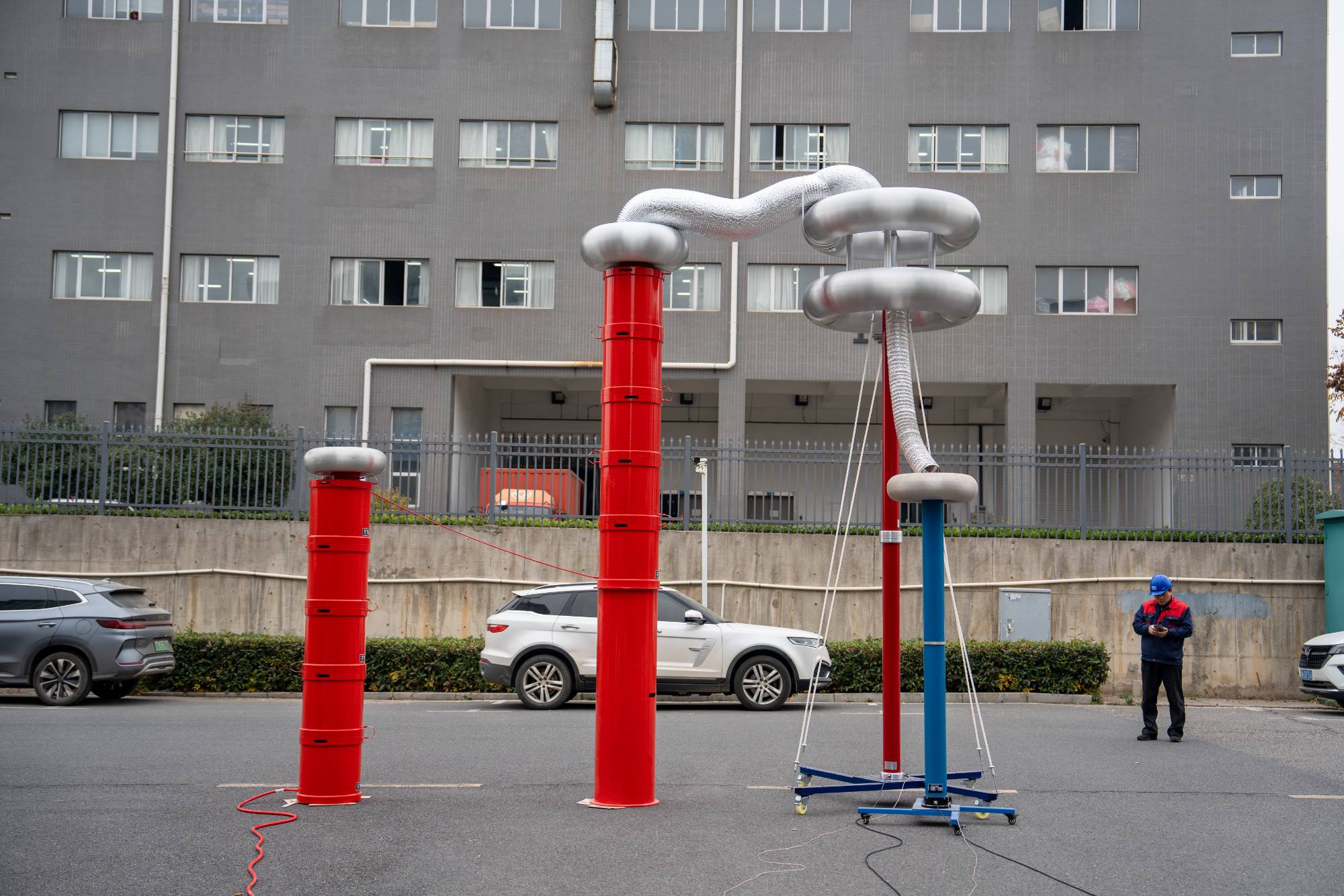 |
The difference between power frequency withstand voltage test device and variable frequency series resonance test device.
Comparative dimension | Power frequency withstand voltage test device | Variable frequency series resonance test device |
Working principle | Utilize a 50Hz power supply and directly boost the voltage through a regulator. | By adjusting the power frequency (usually 20-300Hz), the inductance in the circuit and the capacitance of the test sample are connected in series resonance to obtain high voltage. |
Equipment weight and volume | Heavy and cumbersome. Especially when the voltage level is high and the capacity is large, transformers and voltage regulators are bulky and inconvenient to transport on site. | light. By utilizing resonant boost, the required power capacity is only 1/5 to 1/10 of traditional methods, significantly reducing equipment weight. |
Applicable test samples | Suitable for low voltage level and small capacity equipment, such as small and medium-sized motors, switchgear, insulators, etc. | Specially designed for high-capacity and high-voltage capacitive test samples, such as long-distance power cables, large generators, GIS (gas insulated switchgear), and power transformers. |
Power capacity requirements | High. All the power required for the experiment is directly provided by the power supply, which imposes strict requirements on the on-site power supply. | Low. During circuit resonance, reactive power compensates for each other, and the power supply only needs to provide active power for system losses, with low capacity requirements. |
Security features | When the test sample breaks down, the short-circuit current is high, which may cause significant damage to the fault point. | Having comprehensive protection. After the breakdown of the test sample, the resonance condition is destroyed, and the voltage and short-circuit current will automatically and rapidly decrease, causing minimal damage to the test sample. |
Cost and Budget | Relatively inexpensive. The structure is simple, the technology is mature, and it is a low-cost solution for one-time investment. | Relatively high. Including variable frequency power supply, excitation transformer, adjustable reactor, etc., with many electronic components and more complex technology. |
Typical application of series resonance: covering high-voltage detection scenarios in multiple industries
The application of series resonance technology has penetrated into multiple fields such as power, new energy, and rail transit, becoming a "standard solution" for high-voltage equipment testing.
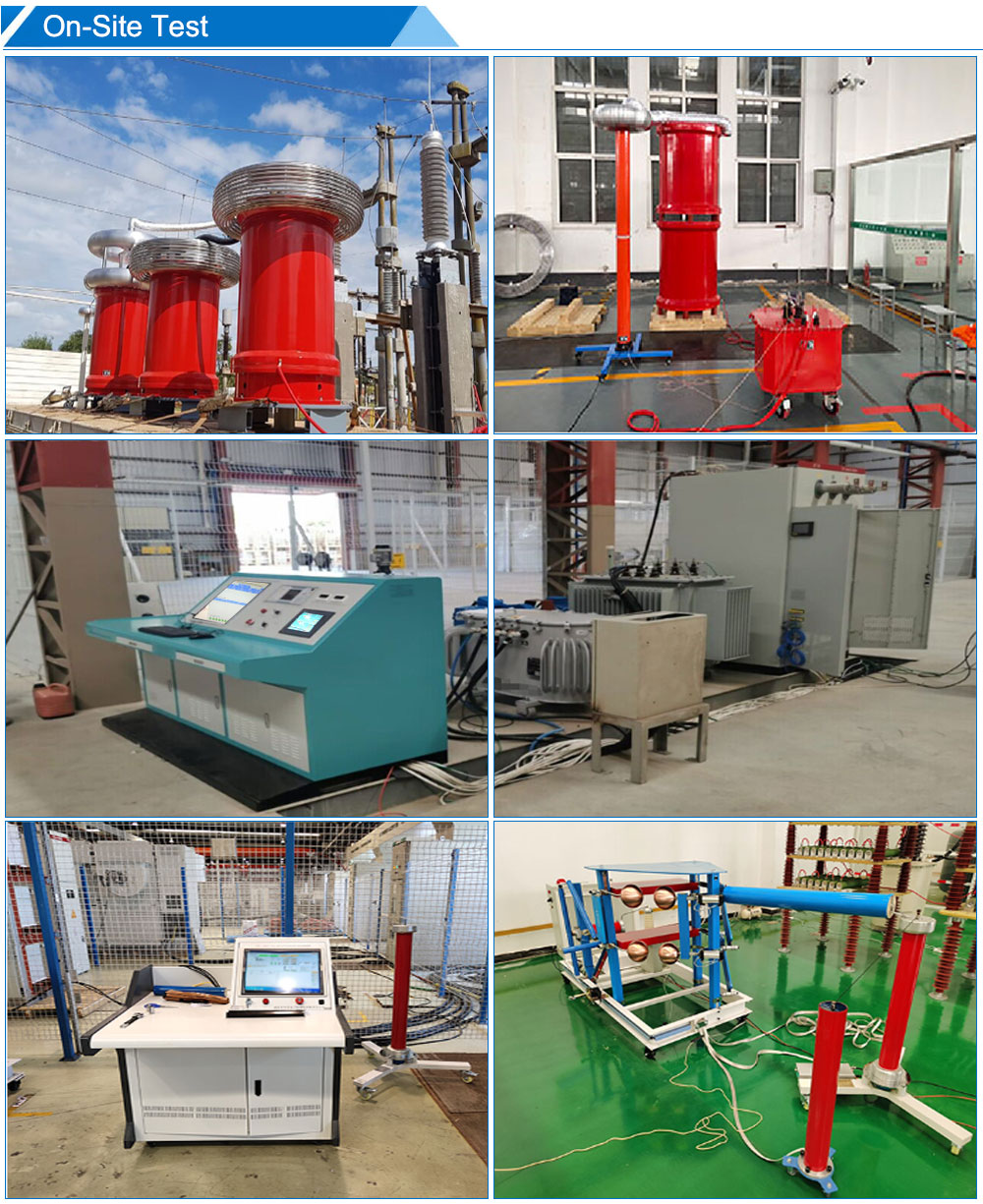
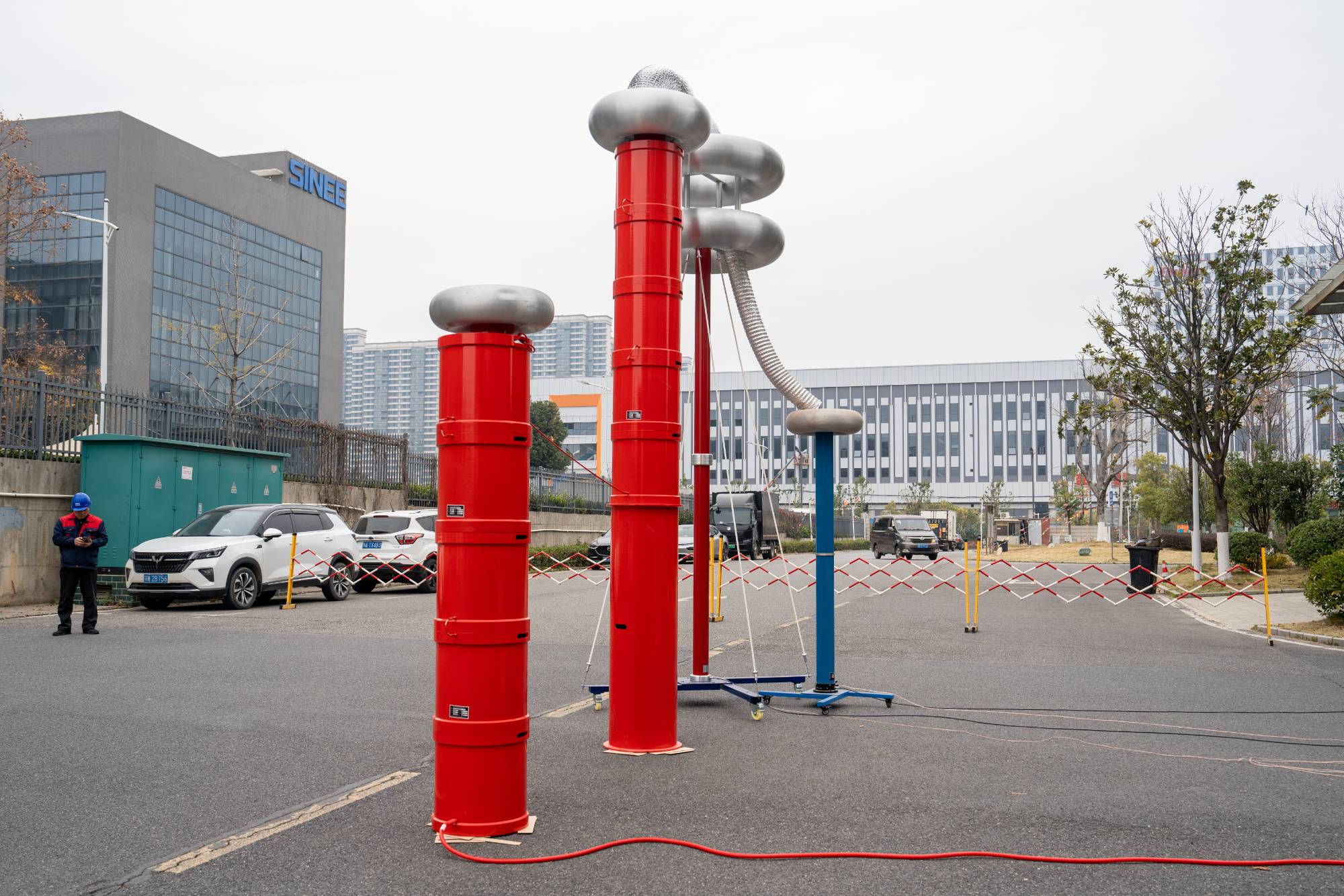
1. In the power system, the voltage withstand test of transformers, GIS composite equipment, high-voltage cables and other equipment in substations generally adopts the series resonance test equipment of Wuhan ultra-high voltage. Taking the 110kV cable detection as an example, the ac series resonant test system manufactures can output a resonant voltage of 126kV and continuously apply pressure for 15 minutes to accurately detect whether there are defects in the cable insulation. Due to low power consumption, only a small generator is needed for power supply, which is suitable for outdoor field operations.
2. In the new energy industry, high-voltage equipment such as inverters for photovoltaic power plants and box type substations for wind power need to undergo series resonance testing to verify their insulation performance before leaving the factory. The series resonant test system manufacture of Wuhan ultra-high voltage can automatically match inductance according to the capacitance of the test sample, adapt to different specifications of equipment for testing, and meet the batch testing needs of new energy enterprises.
3. In the field of rail transit, the voltage withstand test of high-speed rail traction transformers and contact network equipment requires extremely high equipment stability. Its series resonant equipment, with strong anti-interference ability and stable voltage output, can accurately complete testing in complex electromagnetic environments along railways, ensuring the safety of train power supply systems.
FAQ about AC resonant test systems
Yes, AC resonant systems supplier often operate alongside DC high‑voltage generators, partial discharge measuring systems, cable fault locators, SF6 gas analyzers and oil breakdown testers within a comprehensive test framework. This allows utilities and industrial users to combine withstand testing with diagnostics, fault location and condition assessment to improve asset reliability over the full lifecycle.
About us
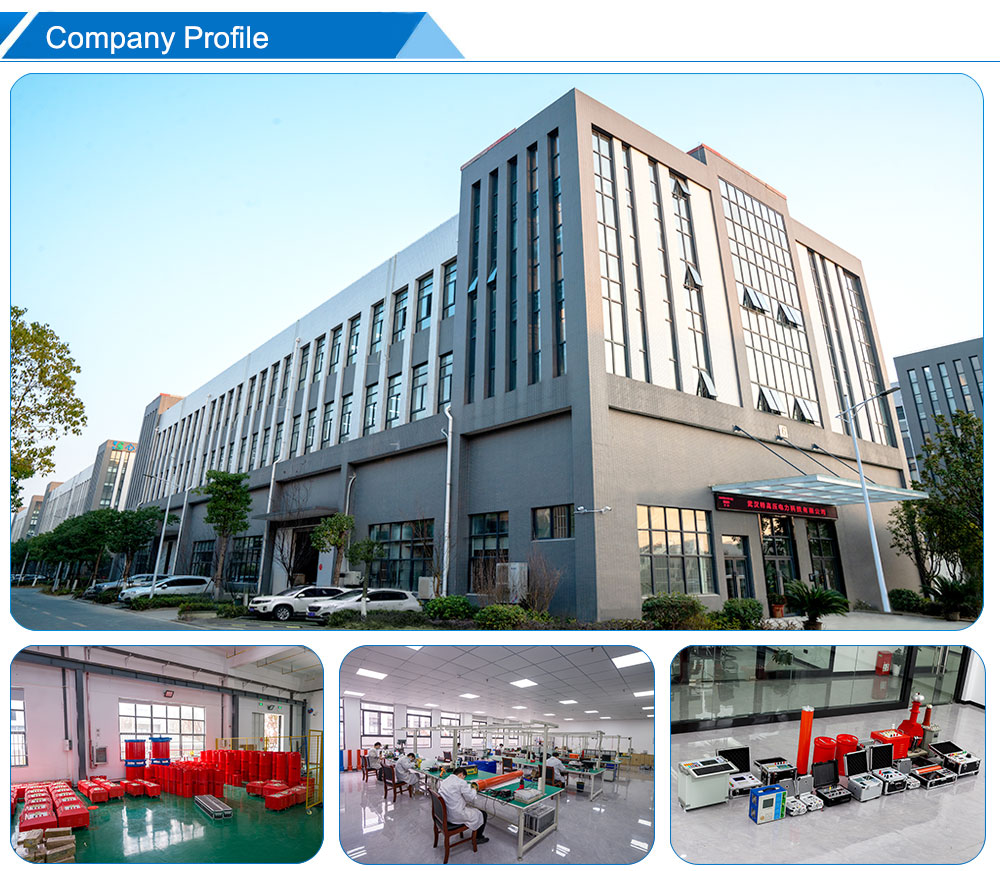
Wuhan UHV Power Technology Co., Ltd. was established in 2021 and is situated in the Wuhan East Lake High-tech Development Zone, enjoying a highly convenient location. As a professional OEM manufacturer, we focus on the research, development, sales, and service of high-voltage testing instruments.
We are a professional AC Resonant Test System manufacturers/Resonant Test Set manufacturers in China.We can provide the best professional AC Resonant Test System for sales and competitive price. If you are looking for AC Resonant Test System supplier, we are a good choice.
Contact us to get Resonant Test Set price.