With the large-scale application of power cables in transmission and distribution networks, the rapid localization of cable faults and accurate assessment of insulation status have become the core challenges of operation and maintenance work. How to make a scientific selection of testing equipment in the face of a variety of categories in the market directly affects the reliability of experimental data and the safety and efficiency of on-site operations. Wuhan UHV Power Technology Co., Ltd. has been rooted in the field of high-voltage electrical measurement for more than 20 years, and its product system and selection practice provide a valuable perspective for this issue.
First, recognize the testing requirements: fault location and insulation diagnosis are two main lines
Power cable testing equipment can be roughly classified into two directions. One is fault location and path detection, which is used to quickly locate the fault point and determine the direction of the cable after a short circuit, disconnection, or damage to the ground insulation of the cable; The second is insulation withstand voltage and partial discharge diagnosis, used for handover testing and preventive testing to evaluate the health level of cable insulation systems. There are significant differences in equipment composition, technical parameters, and operating scenarios between the two main lines. Before selecting, it is necessary to clarify which type of requirements one should prioritize.
Wuhan UHV's product layout in the field of cable testing covers the above two directions, from fault testers to damping oscillation wave state detection systems, to ultra-low frequency high-voltage generators and series resonant voltage withstand devices, forming a relatively complete equipment sequence.
Fault location equipment: Testing distance and resolution are hard indicators
When choosing a cable fault tester, the testing distance range and reading resolution are the most critical parameters. High performance devices typically support multiple testing distances and have resolutions in meters or even centimeters, enabling waveform recognition accuracy to be maintained over long distances. For users mainly using streetlight cables and low-voltage distribution cables, the testing distance requirements are relatively limited, and portable models with convenient operation can be prioritized; For the operation and maintenance units of long-distance transmission cables, attention should be paid to whether the equipment supports long-distance ranging modes such as pulse current method.
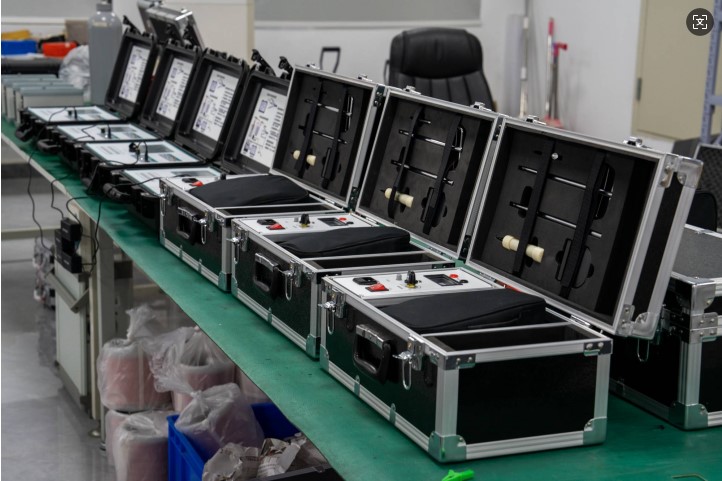
The UHV-500 series cable fault tester and UHV-501 fully intelligent multiple pulse cable fault tester of Wuhan UHV are respectively designed for conventional distance measurement and complex waveform scenarios; The UHV-502 low-voltage cable fault tester is specifically designed to meet the fault location requirements of low-voltage cables. In addition, the UHV-515 intelligent pipeline detector and UHV-520 جهاز تعريف الكابلcan be used in conjunction with fault location equipment to solve the problems of unclear cable paths and live identification.
Insulation withstand voltage test: voltage level determines equipment specifications
The selection of equipment for cable insulation withstand voltage testing is primarily determined by the voltage level. Taking the most widely used very-low frequency VLF high-voltage generator as an example, it is usually recommended to choose models of 30kV and above for 10kV cables, while equipment of 80kV and above is required for 35kV cables. In addition to the output voltage, the load capacity of the equipment is also critical. The load capacity is calibrated based on the load capacitance (μ F) at a frequency of 0.1Hz. The cable capacitance value is generally 0.2 to 0.3 μ F/km. When selecting, a margin of about 20% should be reserved according to the actual cable length to avoid unstable voltage boosting.
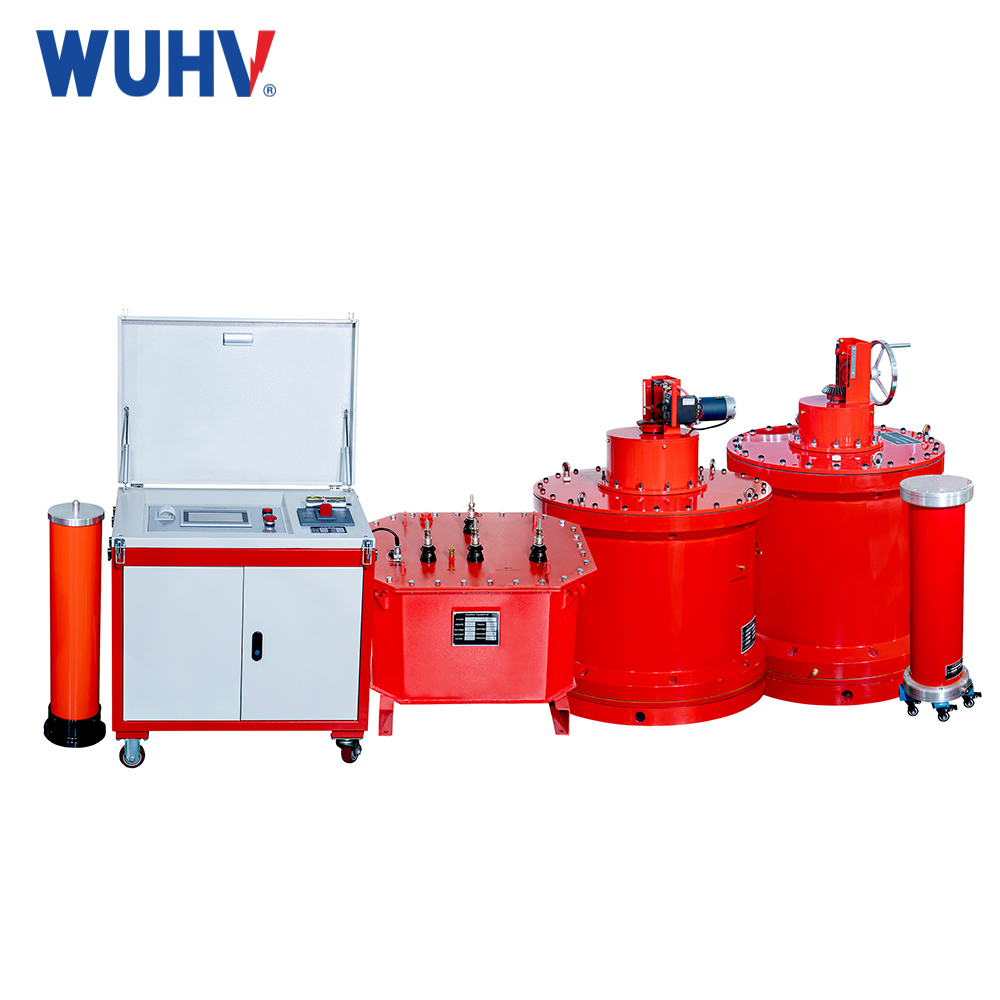
For cables with higher voltage levels or longer distances, the series resonance test device is the mainstream solution for AC withstand voltage testing. Its advantages lie in good output waveform, small required power capacity, and strong on-site adaptability. When selecting, the required capacity should be calculated based on the rated voltage, length, and cross-sectional area of the tested cable, and the series parallel combination of the reactor should be determined. The UHV series variable frequency series resonant voltage withstand test device and cable AC series resonant voltage withstand test device of Wuhan UHV cover the cable testing requirements from 10kV to higher voltage levels.
Partial discharge diagnosis: from inspection and screening to precise positioning
Partial discharge detection is an important means of evaluating the degree of insulation degradation in cables, and equipment selection should distinguish between inspection screening and precise positioning scenarios. Daily live inspection mainly uses handheld devices with high-frequency current method and ultrasonic method, which can be operated without power outage to quickly screen discharge defects; When precise fault location is required, instruments with time-domain reflection or dual terminal traveling wave positioning functions should be selected, or an oscillation wave testing system should be used for accurate diagnosis of power outages.
The UHV-2000A partial discharge detection system, UHV-2000B partial discharge tester, and UHV-2000C partial discharge detection system of Wuhan UHV constitute the product hierarchy from basic detection to system level diagnosis; The UHV-8003 partial discharge inspection device is designed for rapid on-site screening scenarios. The UHV-505 damping oscillation wave state detection system provides a professional solution for accurate positioning and state evaluation of partial discharge in medium voltage cables.
The underlying logic of selection: matching parameters with the scene
Overall, the selection of power cable testing equipment should not pursue "large and comprehensive", but should follow a clear logic: first confirm the voltage level, length, insulation type, and laying method of the cable, then determine the priority of the testing project based on this, and finally weigh portability, operational threshold, and after-sales service while meeting technical parameters. As a member unit of the China Electricity Council, Wuhan UHV's products have covered multiple fields such as electricity, new energy, petroleum and petrochemicals, and transportation, serving customers in more than ten countries and regions including North America, South America, Eastern Europe, and Southeast Asia. For units planning cable testing equipment configuration, starting from actual test scenarios and using core parameters as screening criteria is far more practical than blindly comparing brands and prices.