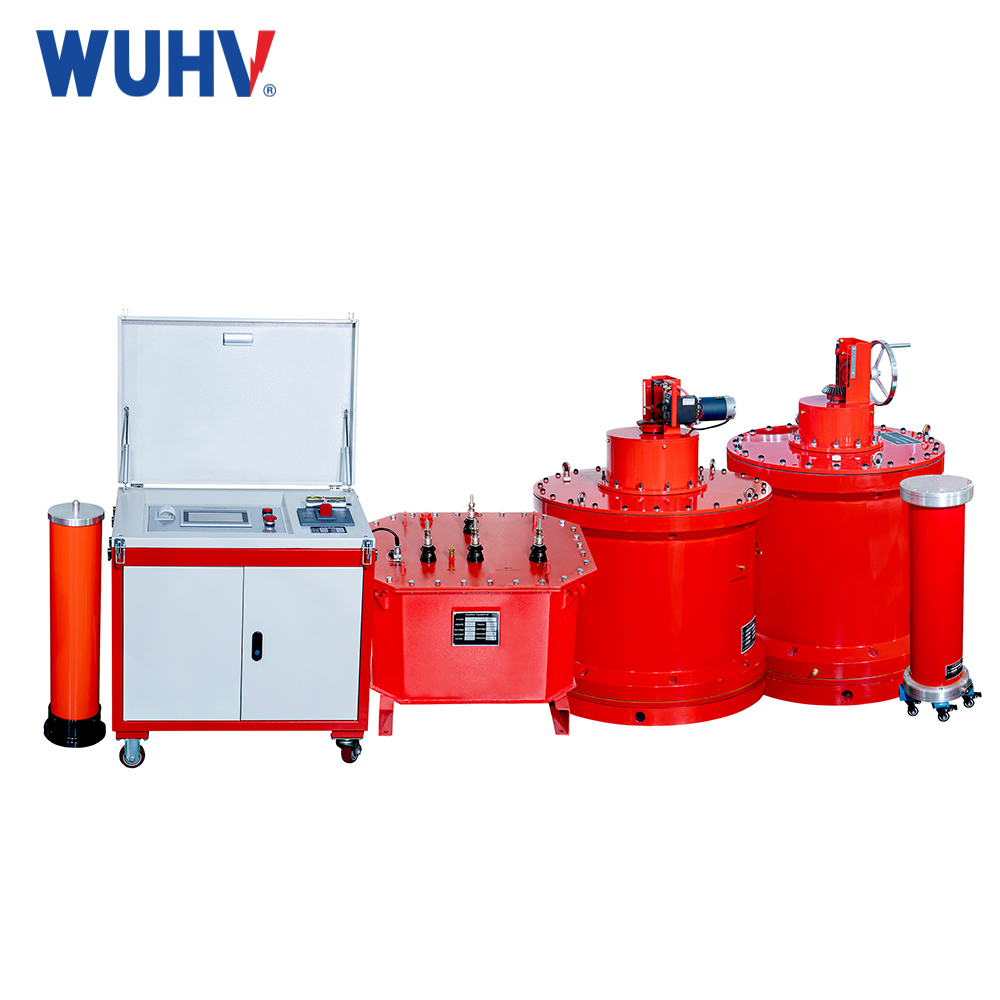
In the handover test and preventive maintenance of the power system, primary current injection equipment is the core equipment for circuit breaker thermal stability verification, current transformer ratio testing, and busbar current carrying capacity verification. Faced with numerous models ranging from hundreds of amperes to tens of thousands of amperes, output current is the first parameter to be clarified when selecting - but it is also the most easily simplified parameter.
Output current: bottom line rather than unique scale
When selecting a primary current injection device, the rated output current must be greater than the maximum test current required by the tested device, which is the hard bottom line to ensure that the test can be completed. Wuhan UHV Power Technology Co., Ltd. pointed out in its product design specifications that users should pay close attention to parameters including rated output current, rated capacity (or voltage), continuous working time, and measurement accuracy. Taking a circuit breaker with a rated current of 630A as an example, if its short-term withstand current requirement reaches 31.5kA/3s, the rated output current of the high current generator should be at least 35kA or 40kA, leaving sufficient margin to avoid long-term full load operation of the equipment.
However, there are obvious blind spots in making decisions based solely on current values. The design goal of a high current generator is to generate AC high currents ranging from several hundred amperes to tens of thousands of amperes in a safe and controllable testing environment, and to be able to maintain them stably within a set time to simulate the heating process of electrical equipment under real working conditions. This means that the output current is only the starting point, and whether the device can stably output within the required time and drive the total impedance of the actual circuit is the key to determining the success or failure of the test.
From 500A to 10000A: Match models according to test scenarios
الDDG series high current generator of Wuhan UHV covers a complete product gradient from 500A to 10000A, and the product structure gradually transitions from integrated to split, providing a clear reference frame for selection in different scenarios.
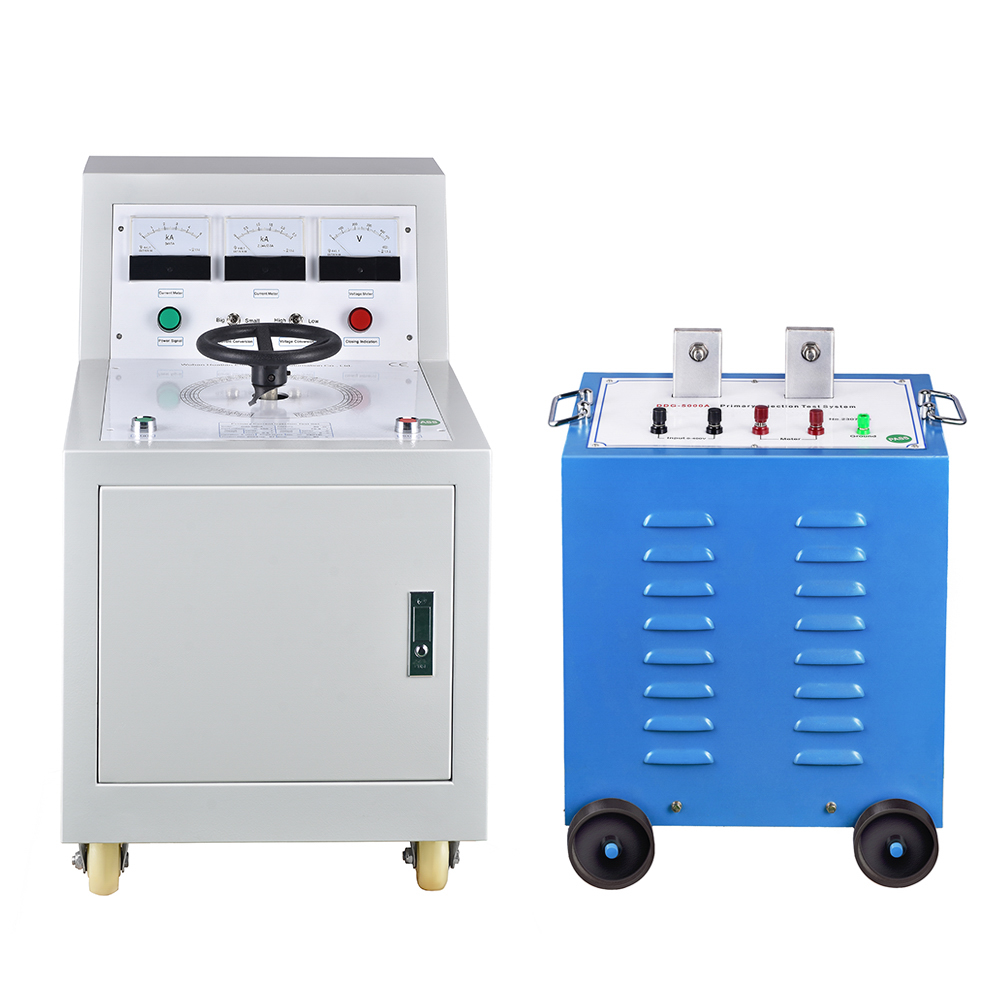
DDG-500 and DDG-1000 adopt an integrated structure, with weights of 48kg and 80kg respectively, and output currents of 500A and 1000A. They are suitable for small and medium current scenarios such as current transformer ratio verification and protection system primary current injection testing. The DDG-2500 outputs 2500A with a capacity of 15kVA and weighs 145kg. It is still an integrated design that can meet the thermal stability verification requirements of medium capacity circuit breakers. DDG-4000 has a capacity of 24kVA and an output of 4000A, offering both integrated and split structure options for greater flexibility. Starting from DDG-5000, the equipment is converted to a split structure, with the control console separated from the step-up transformer. The total weight of DDG-5000 is about 280kg, while DDG-10000 outputs 10000A with a capacity of 60kVA, with a total weight of about 400kg. It is suitable for temperature rise and short-term withstand tests of large circuit breakers, busbars, and conductive components.
A noteworthy design feature of this product line is that the secondary voltage is uniformly 6V, which means that the increase in output current is mainly achieved by increasing the device capacity. When selecting, users should not only consider the upper limit of the current, but also evaluate the required capacity based on the total impedance of the testing circuit.
The linkage relationship between capacity, working system, and circuit
The actual output capability of a high current generator depends on the complete testing circuit. The equipment capacity (kVA) determines the upper limit of the load impedance it can drive, and the tested equipment, connecting wires, contact resistance of contacts, and the number of turns of current transformers in the circuit will significantly affect the required capacity. Wuhan UHV emphasizes in its technical specifications that for temperature rise tests that require a long period of time, the continuous working ability and heat dissipation performance of the equipment are particularly critical; For transformer calibration, there are higher requirements for the stability of current and waveform quality.
The DDG series belongs to short-term or intermittent working equipment, and this characteristic cannot be ignored when selecting. If the testing project requires continuous flow for several hours, it is necessary to confirm the allowable working time period of the equipment at the target current, or consider the DDL series fully automatic temperature rise test device designed specifically for temperature rise testing. In addition, the DDG series uses an autotransformer to regulate the output and is equipped with two ammeters for monitoring the size range. The operation is mainly based on indicator lights and buttons. For experiments that require high repeatability and data recording, it can be evaluated whether to add an automation control module.
Selection path based on testing requirements
The selection of standards should be derived in reverse from the tested object: first confirm the type and test nature of the tested equipment, consult its technical specifications to clarify the test current value, duration, and accuracy requirements, then estimate the total impedance of the test circuit, calculate the minimum capacity and voltage required based on this, and finally determine the model comprehensively based on the on-site power supply conditions (DDG-5000 and above models require 380V input), structural form (integrated or split), and budget.
Wuhan UHV demonstrated the practical application of this selection logic in customer cases. A certain motor manufacturing enterprise needs to conduct short-circuit withstand capability testing on multiple high-voltage motors during the factory test of new products. The original equipment output is unstable. After understanding its daily test frequency and current curve requirements, Wuhan UHV provided DDG-3000A equipment and arranged technical personnel to guide the operation process and daily maintenance points on site. This case illustrates that the matching of output current requires a comprehensive judgment based on test frequency and actual current curve, rather than simply comparing nameplate parameters.
For selection decision-makers, output current is the first parameter entering the selection process, but capacity matching, duty cycle confirmation, and loop impedance evaluation also determine whether the equipment can truly meet testing requirements. The DDG series of Wuhan UHV provides a reference technical solution for testing scenarios of different scales, with gradient coverage and multiple structural forms ranging from 500A to 10000A.