In the field of power equipment testing, dielectric loss testing is a crucial step. It can intuitively reflect the aging degree of insulation materials and potential insulation defects, thereby effectively preventing major faults in electrical equipment. In actual on-site testing, electromagnetic interference is ubiquitous and greatly affects the accuracy of testing. Today, let's talk about how to choose a dielectric loss tester with strong anti-interference ability to ensure the reliability of your test data.
Why is anti-interference so important?
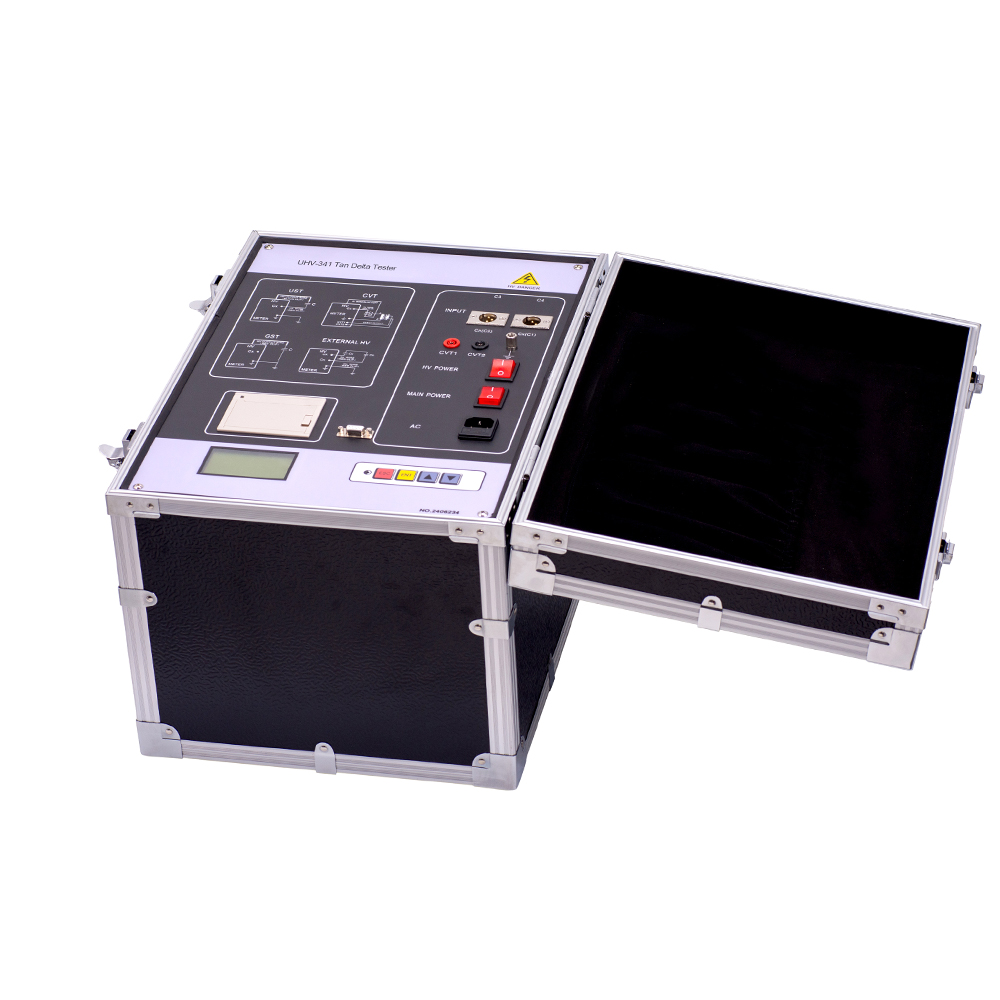
Let's understand the concepts of "dielectric loss" and "dielectric loss tester". Dielectric loss, in simple terms, refers to the energy loss that occurs in electrical insulation materials under the action of alternating electric fields due to molecular polarization and ion conduction. The dielectric loss tester is a device that uses parameters such as the tangent of the loss angle (tan δ) of the measured medium to evaluate the insulation state.
In complex on-site environments, such as near substations, strong electromagnetic interference (from high-voltage lines, switch operations, transformers, etc.) can be "noisy" superimposed on weak measured signals, causing test readings to fluctuate and even abnormal results to occur. At this point, a dielectric loss tester with superior anti-interference performance becomes particularly valuable.
What are the factors that affect anti-interference ability?
The main factors affecting the anti-interference ability of dielectric loss testers include:
Internal circuit design: the shielding design of the instrument, the efficiency of the filter circuit, the progressiveness of the signal processing algorithm, etc., are directly related to its ability to resist external interference.
Testing method: What scientific testing methods, such as differential measurement, synchronous measurement, etc., can effectively offset some common mode interference.
Grounding protection: Good grounding is an important link in reducing external interference intrusion.
Testing environment: Although we emphasize the anti-interference ability of the instrument itself, choosing a testing timing and location with relatively less interference can also achieve twice the result with half the effort.
Utilizing advanced technology to improve testing accuracy
Faced with increasingly complex testing environments, Wuhan UHV Power Technology Co., Ltd. has been committed to researching and producing high-performance power testing instruments. Their dielectric loss tester products adopt multiple advanced technologies to solve the problem of anti-interference. For example, by using broadband measurement technology, signal characteristics can be captured over a wider frequency range, thereby better identifying and filtering out noise. By combining digital signal processing (DSP) technology, the collected signals can be finely analyzed, effectively separating real signals from interference signals.
How to make better choices?
When making a purchase, you can pay attention to the following points:
View test report: Understand the actual test data and performance indicators of the instrument under different interference environments.
Consulting professionals: The engineers at Wuhan UHV Power Technology Co., Ltd. have rich experience and can provide you with professional selection advice.
Actual demonstration: If conditions permit, conducting on-site practical operation demonstrations is the most direct way to test instrument performance.
Pay attention to after-sales service: High quality after-sales service and technical support can ensure that your equipment receives continuous protection during use.
Having a reliable dielectric loss tester is not only responsible for the equipment, but also ensures the safe operation of the power system. The professional products of Wuhan UHV Power Technology Co., Ltd. will assist you in obtaining accurate and reliable measurement results under complex on-site conditions.
Frequently Asked Questions (FAQ)
Q: What are the main aspects of the anti-interference ability of the dielectric loss tester? Answer: This is mainly reflected in the ability to accurately measure weak signals without being affected by external electromagnetic interference, ensuring the stability and reliability of test data.
Q: What factors are most likely to cause interference in dielectric loss testing during on-site testing? Answer: Electromagnetic radiation and high-frequency noise generated by high-voltage lines, switch operations, lightning, and other operating equipment.
Q: Apart from the performance of the instrument itself, what else can we do to improve the anti-interference effect of the test? Answer: Reasonably select testing points, optimize grounding, avoid testing during strong interference periods, use shielded cables, etc.
Q: What are the key technologies required for an excellent dielectric loss tester? Answer: For example, differential measurement technology, digital signal processing (DSP), broadband measurement, excellent shielding design, etc.
Q: What are the advantages of the dielectric loss tester from Wuhan UHV Power Technology Co., Ltd. in terms of anti-interference? Answer: The products of Wuhan UHV Power Technology Co., Ltd. have undergone strict optimization in internal circuit design, testing methods, and advanced technologies adopted, which can effectively cope with complex on-site interference and ensure the accuracy of testing.