Ensuring the safe and reliable operation of equipment is of utmost importance in the power system. Among them, series variable frequency resonance, as a special electromagnetic phenomenon, often occurs during the testing and operation of power equipment. Understanding it is crucial for ensuring the stability of the power system. Today, let's talk about this phenomenon that sounds a bit convoluted.
What is series variable frequency resonance?
Simply put, Series Resonant Frequency refers to the resonance that occurs in an AC circuit when the inductance (L) and capacitance (C) of the circuit have equal inductance and capacitance at a specific frequency. At this frequency, the total impedance of the circuit is minimized (ideally close to zero), and the current will become very large, which may cause damage to the equipment. Imagine that just as an instrument produces its loudest sound at a specific pitch, a circuit also resonates at its resonant frequency, although this resonance can sometimes be dangerous.
What are the influencing factors?
The main factors affecting the resonant frequency of series frequency conversion are:
Inductance value (L): The larger the inductance of the inductor coil, the lower the resonant frequency.
Capacitance value (C): The larger the capacitance value of a capacitor, the lower its resonant frequency.
Power frequency (f): Although we are discussing the resonant frequency determined by L and C, the actual operating power frequency can also affect whether the system will enter a resonant state.
The formula for calculating the resonant frequency is: f=1/(2 π√ LC).
How can we better respond?
To better cope with series variable frequency resonance, we can start from the following aspects:
Accurate parameter selection: When designing and selecting, it is necessary to carefully calculate and select appropriate inductance and capacitance values to avoid resonance with possible power frequencies or their harmonics.
Installing damping devices: Adding resistors (damping) appropriately in the circuit can effectively suppress excessive current during resonance.
Frequency monitoring and control: using advanced monitoring systems to track the resonant frequency of the circuit in real time, and taking measures such as adjusting circuit parameters or cutting off power when approaching dangerous frequencies.
What tools can help?
In practical applications, many professional tools can help us better understand and control series variable frequency resonance:
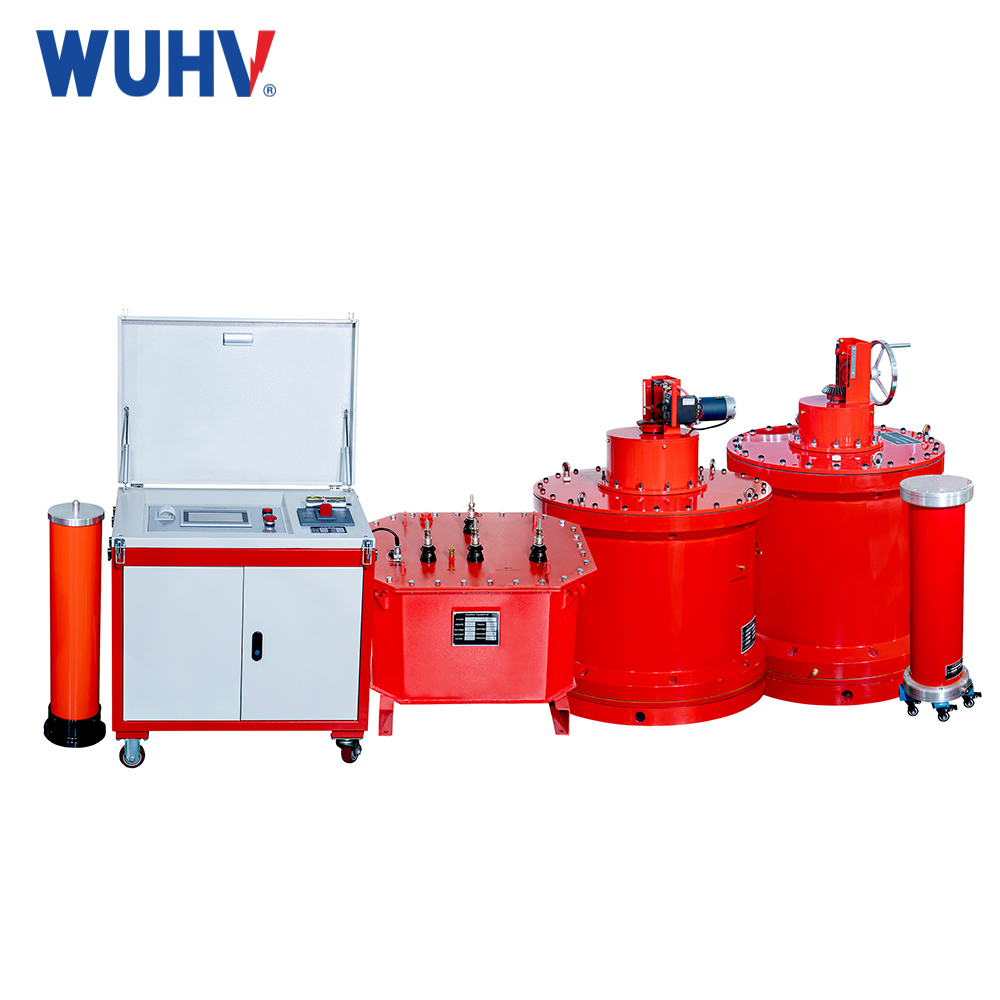
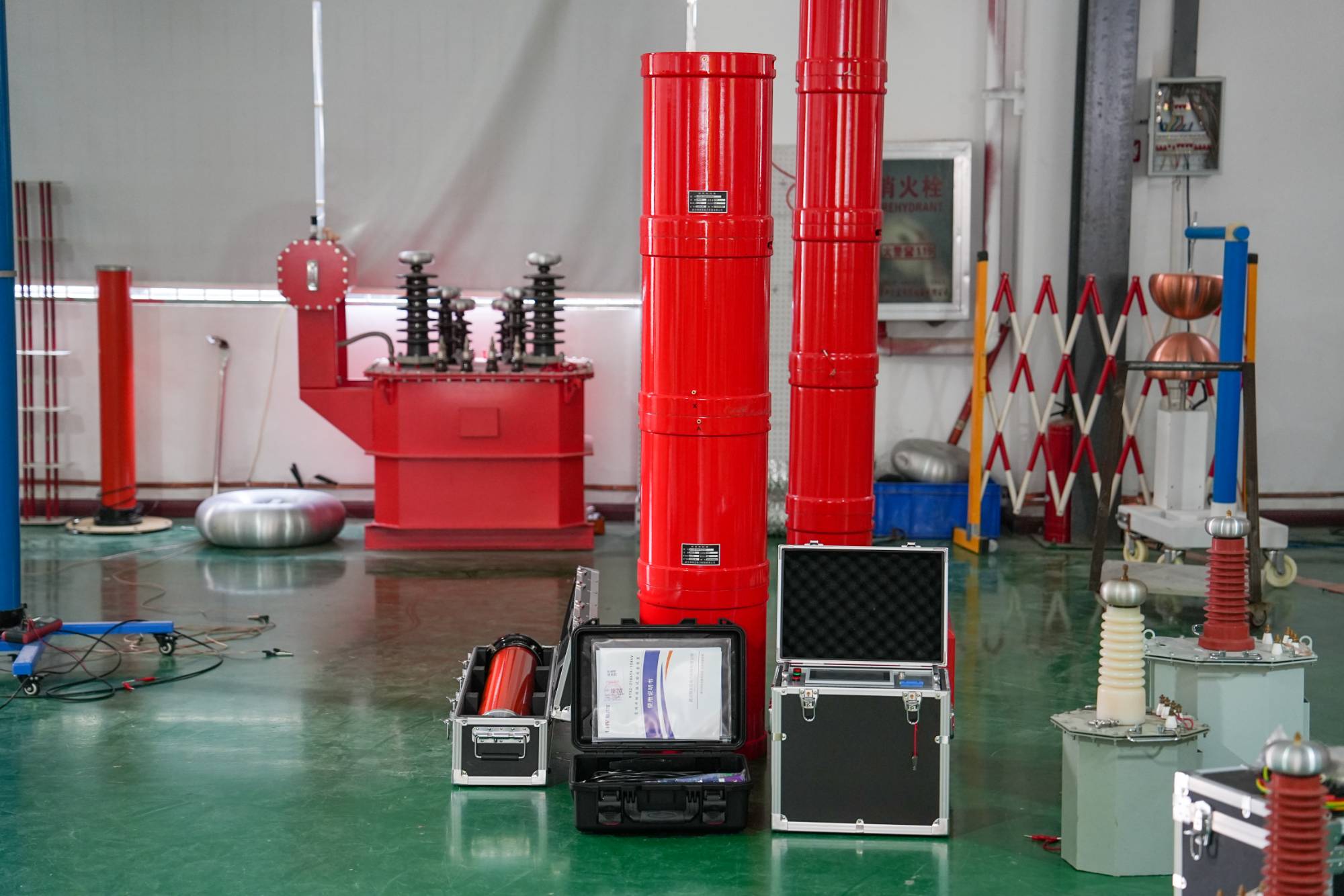
Resonance test equipment: This is a key device for conducting high-voltage electrical equipment (such as transformers, cables, GIS, etc.) withstand voltage tests. It can accurately generate power sources of different frequencies and find the resonance point of the equipment to verify its insulation performance.
Circuit simulation software: Through simulation software, engineers can simulate the behavior of circuits on computers, predict potential resonance risks, and optimize designs.
Data acquisition and analysis system: used for real-time monitoring of electrical equipment in operation. Once abnormal resonance phenomena are detected, timely warnings can be issued.
Wuhan UHV Power Technology Co., Ltd. has rich experience and advanced technology in the field of power equipment testing. The solutions it provides can effectively help users solve technical problems such as series variable frequency resonance.
What is it related to?
Series variable frequency resonance is closely related to many power system phenomena, such as:
Cable test: The withstand voltage test of ultra-high voltage cables often requires the use of series resonance to generate higher test voltage with lower input power.
Generator and transformer testing: The insulation performance testing of these large electrical equipment during factory and operation often involves resonance principles.
Power system stability: Improper resonance may cause severe fluctuations in voltage or current, affecting the overall stability of the power system.
Why is it so important?
Understanding and controlling series variable frequency resonance is to:
Ensure equipment safety: prevent equipment damage caused by overvoltage and overcurrent due to resonance.
Improve testing efficiency: Especially in high-voltage electrical equipment testing, series resonance technology can significantly reduce the power capacity required for testing and improve efficiency.
Ensure the stability of the power grid: avoid resonance phenomena from interfering with the power grid, and maintain the reliable operation of the power grid.
Wuhan UHV Power Technology Co., Ltd., with its professional strength, provides users with high-quality power testing equipment and technical support to ensure the safe and stable operation of the power system.
Frequently Asked Questions:
Q: Will series frequency conversion resonance necessarily cause damage to the equipment? A: Not necessarily. Moderate resonance may not immediately damage the equipment, but prolonged resonance or high amplitude resonance can significantly increase the risk of equipment damage.
Q: What are sensory and capacitive resistance? A: Inductive reactance is the blocking effect of inductance on current, which is proportional to frequency; Capacitive impedance is the hindering effect of a capacitor on current, which is inversely proportional to frequency. At the resonance point, inductive impedance equals capacitive impedance.
Q: How to determine if there is a risk of series variable frequency resonance in my power system? A: Professional personnel can conduct on-site inspections and calculations, or specialized monitoring equipment can be used to assess risks.
Q: In addition to cable testing, what other scenarios will use series variable frequency resonance technology? A: It is also widely used in insulation withstand voltage testing of high-voltage electrical equipment such as GIS (gas insulated metal enclosed switchgear), transformers, circuit breakers, etc.
Q: What are the consequences of choosing an inappropriate resonant frequency? A: May result in insufficient test voltage, inability to effectively verify equipment insulation performance, or unexpected resonance during operation, causing damage to the equipment.