Did you know? The safe and stable operation of the power system relies on rigorous control over every detail. Today, let's talk about a device that may sound technical, but is crucial - the tower grounding resistance tester. It is like the "stethoscope" of the power guard, which can accurately "sense" the health status of power facilities.
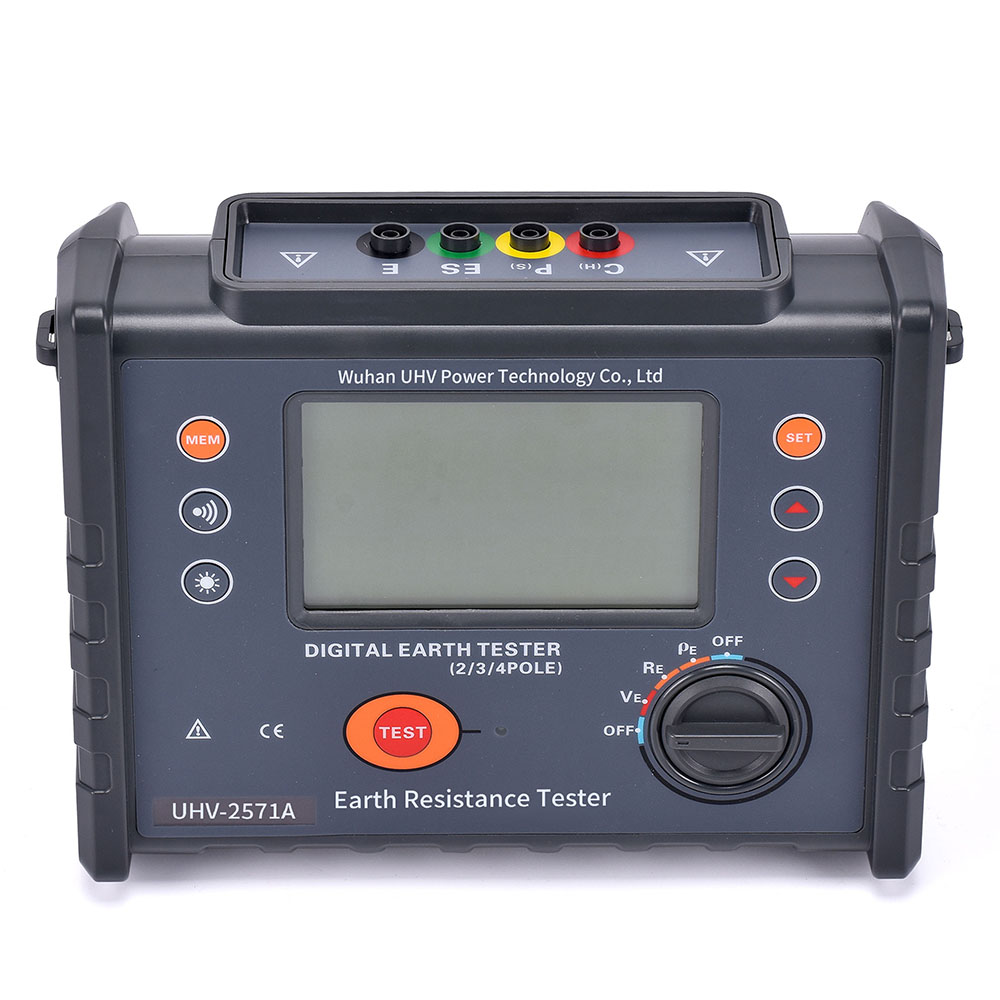
What is a tower grounding resistance tester?
Simply put, a tower grounding resistance tester is an instrument specifically designed to measure the grounding resistance of power tower grounding devices. Grounding resistance, as the name suggests, refers to the obstruction encountered by current flowing into the earth through a grounding body. The magnitude of this value is directly related to whether the current can be safely conducted to the ground in the event of lightning strikes, short circuits, and other faults, avoiding damage to equipment and personnel.
Why is grounding resistance so important?
Ensuring personal safety: When power facilities fail, especially when high-voltage parts leak electricity, good grounding can quickly guide the fault current into the ground, reduce the ground potential, and prevent electric shock to humans and animals.
Protection equipment: Abnormal grounding resistance may result in ineffective discharge of lightning overvoltage, thereby damaging expensive electrical equipment.
Maintaining system stability: The grounding system is an important component of the power system, and its reliability directly affects the stable operation of the entire system.
What are the factors that affect grounding resistance?
The size of grounding resistance is influenced by various factors:
Soil resistivity: This is the most important factor. The humidity, salt content, temperature, and soil type (such as sand, clay, etc.) of soil can significantly affect its electrical resistivity.
The structure and burial depth of grounding bodies: The shape, size, quantity, burial depth, and method of grounding bodies all affect their contact area and conductive path with the soil.
Corrosion of grounding body: Over time, the grounding body will corrode, resulting in a decrease in effective conductive cross-sectional area and an increase in resistance.
How to use tools to ensure that the grounding resistance is qualified?
In the face of these influencing factors, we need to use professional tools for precise measurement. The professional equipment provided by Wuhan UHV Power Technology Co., Ltd. is our capable assistant in solving this challenge.
Selection of measuring tools
There are various types of grounding resistance testers on the market, and it is crucial to choose a tester with stable performance and high accuracy. Wuhan UHV Power Technology Co., Ltd. has rich experience in the field of power testing, and its products can meet the rigorous on-site testing requirements.
Preparation and implementation before measurement
Choose the appropriate measurement method: commonly used methods include three pole method, four pole method, etc. Choose the most suitable method according to the on-site situation.
Insertion of probe: Insert the probe of the tester into the soil correctly according to the instructions to ensure good contact.
Connect the tested grounding body: According to the instrument requirements, connect the grounding down lead of the tested tower.
Read and record data: Start the instrument and wait for the reading to stabilize before recording the measured grounding resistance value.
How can we do better?
Regular testing: Do not wait until problems arise to measure. It is recommended to regularly test the grounding resistance of the tower according to regulations, in order to promptly identify and address potential hazards.
Multi point measurement: For important towers, multiple points or different angles can be measured to obtain more comprehensive data.
Comparing historical data: Comparing and analyzing the measurement results with historical data can provide a more intuitive understanding of the trend of changes in grounding resistance.
Pay attention to changes in soil environment: Understanding and recording seasonal changes in soil (such as dry and rainy seasons) can help understand fluctuations in grounding resistance.
Professional Maintenance: Wuhan UHV Power Technology Co., Ltd. not only provides high-quality testing instruments, but also focuses on providing customers with professional maintenance and technical support to ensure the long-term stable operation of equipment.
FAQ
Q1: What is the qualified grounding resistance for a tower? A1: The requirements for grounding resistance may vary among different regions and types of towers. Generally, the grounding resistance of low-voltage lines should not exceed 4 ohms, while high-voltage lines (such as 110kV and above) may require lower resistance, which needs to refer to the latest regulations or relevant technical standards of the local power department.
Q2: Why do the measurement results of the same tower vary at different times? A2: This is mainly related to changes in soil resistivity. For example, during the rainy season, if the soil moisture content is high, the electrical resistivity will decrease, and the grounding resistance will also decrease accordingly; The dry season is the opposite.
Q3: What should be noted when using a grounding resistance tester? A3: Ensure that the tester has sufficient power, the connecting wires are firm and reliable, the probe insertion depth is sufficient and the contact is good. At the same time, pay attention to selecting the correct measurement method and try to measure under relatively stable weather conditions.
Q4: What should I do if I find that the grounding resistance exceeds the standard? A4: The grounding body should be immediately checked for corrosion, breakage, or other conditions, or measures such as adding grounding bodies and improving soil should be considered to reduce grounding resistance. It is important to contact a professional power maintenance team for handling.
Q5: What are the advantages of the products of Wuhan UHV Power Technology Co., Ltd? A5: The products of Wuhan UHV Power Technology Co., Ltd. usually perform well in accuracy, stability, usability, and after-sales service, which can meet the testing needs of various complex working conditions on site and provide professional technical support.